
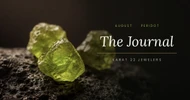
Peridot: The August Birthstone Born of Fire
Posted by The Karat 22 Family on Aug 31st 2026
August’s gem crystallizes forty miles underground and reaches daylight only by volcano — or by meteorite.
There are gemstones that formed quietly, over unhurried millennia, in the cool dark of the earth’s crust. Peridot is not one of them.
August’s birthstone is a survivor. It crystallizes in the earth’s upper mantle — as deep as forty miles down, under pressures most gems never encounter — and reaches the surface only when volcanoes carry it there. A rarer variety arrives by a stranger route still: embedded in pallasite meteorites, having crossed open space before landing on the earth that would eventually cut and set it.
For a gem so dramatic in origin, peridot wears remarkably softly. Its color — that unmistakable warm, lit-from-within green — flatters nearly every complexion and sits beautifully against yellow, white, and rose gold alike.
In brief
Peridot is the birthstone for August and the gem-quality variety of the mineral olivine. It is the only major gemstone that occurs in a single hue — green — because its color comes from iron built into the crystal itself rather than from a trace impurity.
It rates 6.5 to 7 on the Mohs scale, which makes it well suited to necklaces, pendants, and earrings, and something to wear more thoughtfully in rings. It must never be cleaned in an ultrasonic or steam cleaner.
Traditionally, peridot signifies protection, prosperity, and renewal. August also has two further birthstones: spinel, added in 2016, and sardonyx, the older traditional stone.
A gem with only one color
Sapphire ranges from cornflower blue to padparadscha pink. Tourmaline spans nearly the entire spectrum. Peridot is green — always green — varying only in tone and in how far it leans yellow, from a brownish or yellowish green toward that most prized shade, a pure grass green.
The reason lies in its chemistry. In most colored gemstones, color arrives as a trace impurity: a whisper of chromium turns beryl into emerald; iron and titanium turn corundum blue. In peridot, iron is not an impurity but a fundamental component of the crystal. The color is not an accident of the stone.
The color is not something that happened to the stone. It is the stone.
| Property | Detail |
|---|---|
| Mineral | Olivine |
| Color | Yellowish green to greenish yellow; finest is pure grass green |
| Mohs hardness | 6.5 – 7 |
| Refractive index | 1.65 – 1.69 |
| Birthstone month | August |
| Traditional meaning | Protection, prosperity, renewal |
Peridot also has an unusually high double refraction — look closely into a well-cut stone and you can see two of each pavilion facet. Gemologists use it to identify the gem, and it is one of the reasons fine peridot reads with such depth in the hand.
The gem that spent centuries being mistaken for something else
Peridot’s history is largely a history of misidentification — and it is all the more charming for it.
The finest ancient peridot came from Zabargad, a small, wind-scoured island in the Red Sea that the Greeks called Topazios. Archaeological evidence places organized mining there from the 3rd century BCE, in the Ptolemaic era, continuing well into Roman times. The island was remote and punishingly hot, and its output moved through Egyptian ports as one of the ancient world’s most closely held gem supplies.
The stones it produced were extraordinary — and were consistently sold as emerald.
The Shrine of the Three Holy Kings in Cologne Cathedral is set with 200 carats of gems long believed to be emeralds. They are peridot. And some historians believe that Cleopatra’s famous emerald collection was, in fact, peridot from those same Red Sea mines — meaning history’s most celebrated emeralds may never have been emeralds at all.
Even the name reflects the gem’s borrowed identity: it is often said to descend from the Arabic faridat, meaning simply “gem,” though the etymology is disputed. Ancient wearers set it in gold as a talisman against evil and against night terrors — a stone of protection, worn close.
Where fine peridot comes from today
- Pakistan — high-altitude Himalayan deposits produce some of the largest and cleanest fine material
- Myanmar — the Pyaung-Gaung deposits near Mogok yield the finest color and the largest sizes
- Arizona, USA — the San Carlos Apache Reservation remains the primary American source, where ancient lava flows scattered peridot across the desert floor
- China, Vietnam, and Tanzania — significant commercial production
- Hawaii — not a commercial source, but olivine grains there color entire beaches green
- Space — pallasite meteorites carry gem-quality peridot that formed on another body entirely
Few gems can offer a story that spans Cleopatra, a Gothic cathedral, an Arizona desert, and a meteorite.
The Karat 22 Edit
Four ways to wear it
Our August selection is built around one idea: peridot should feel light. This is not a stone that wants heavy architecture around it. It wants air, fine metal, and just enough diamond to make the green look lit rather than merely colored.
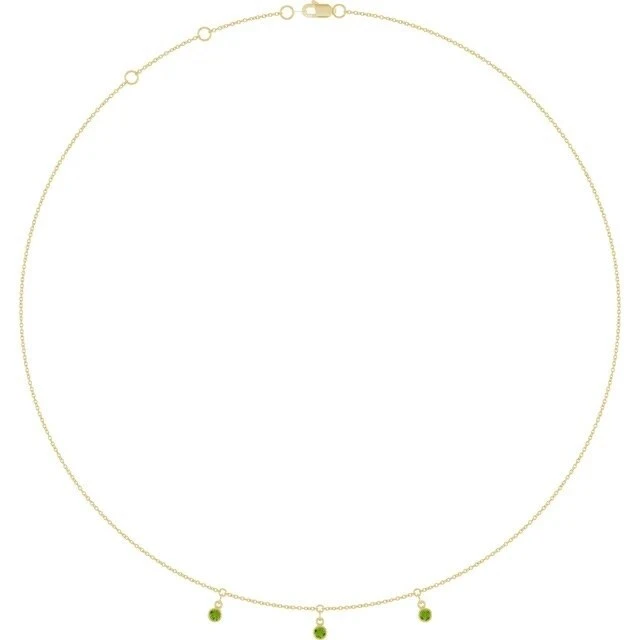
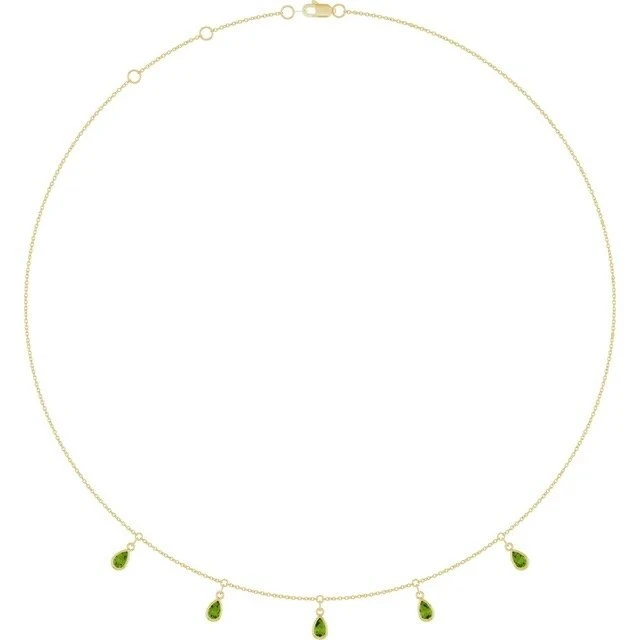
The Peridot Briolette Station Necklace
A whisper-fine gold chain punctuated with faceted peridot briolettes that catch and release light with the smallest movement. Available in graduated station counts, the style is designed to be layered: wear one alone for quiet color, or two and three at staggered lengths for a look that reads considered rather than assembled.
Best for everyday wear, layering, and the client who wants color without ceremony.
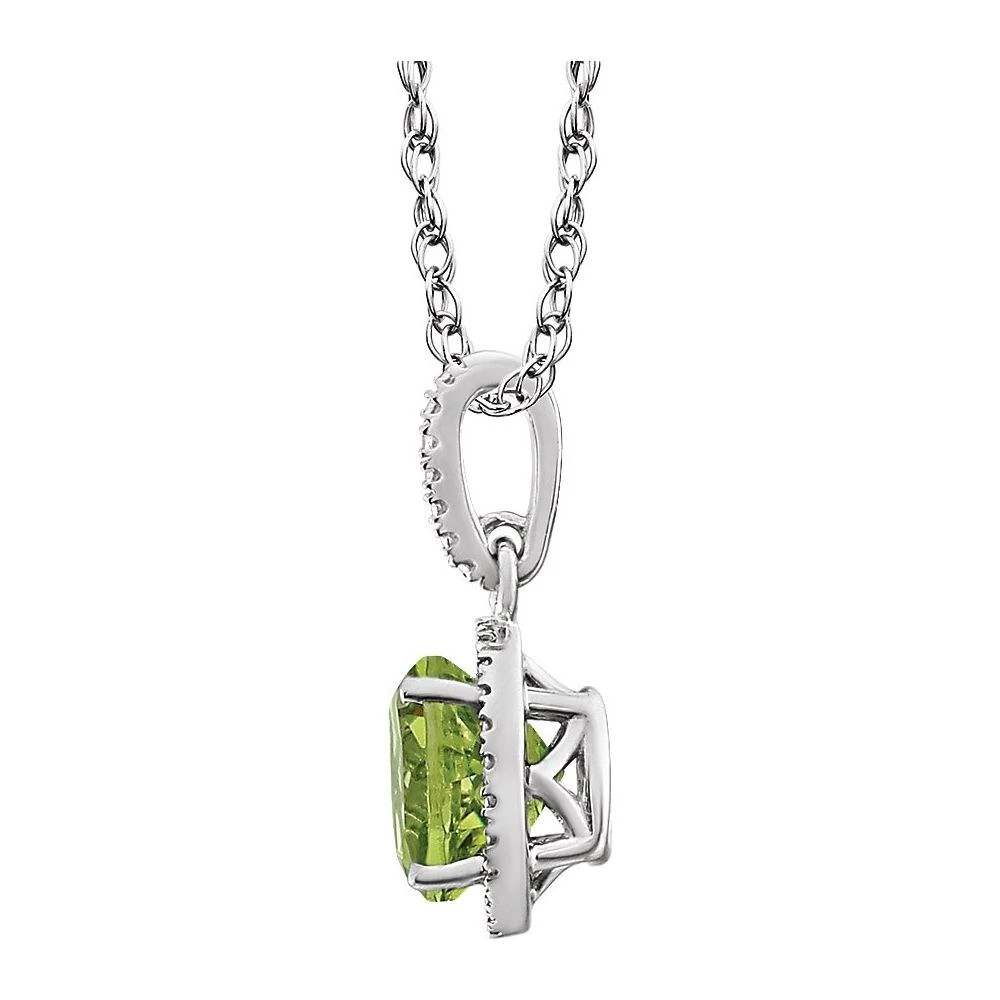
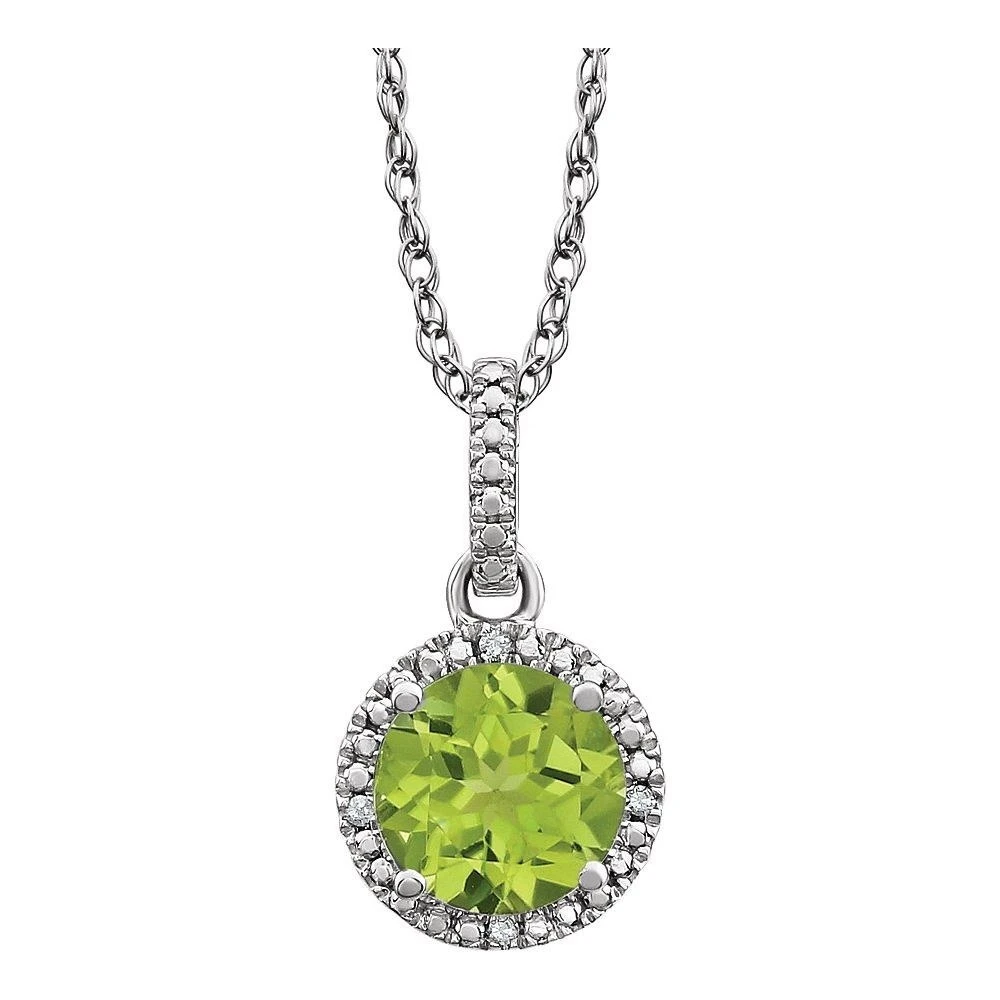
The Diamond Halo Peridot Pendant
Classic, and deliberately so. A round brilliant peridot set within a full pavé diamond halo, suspended from a diamond-set bail. The halo does real work here: the white of the diamonds sharpens the green and makes a modestly sized stone read considerably larger.
In white gold the effect is cool and modern; the same silhouette in yellow gold warms the stone noticeably. Both are worth seeing side by side.
Best for a gift with occasion weight — a birthday, a first August anniversary.
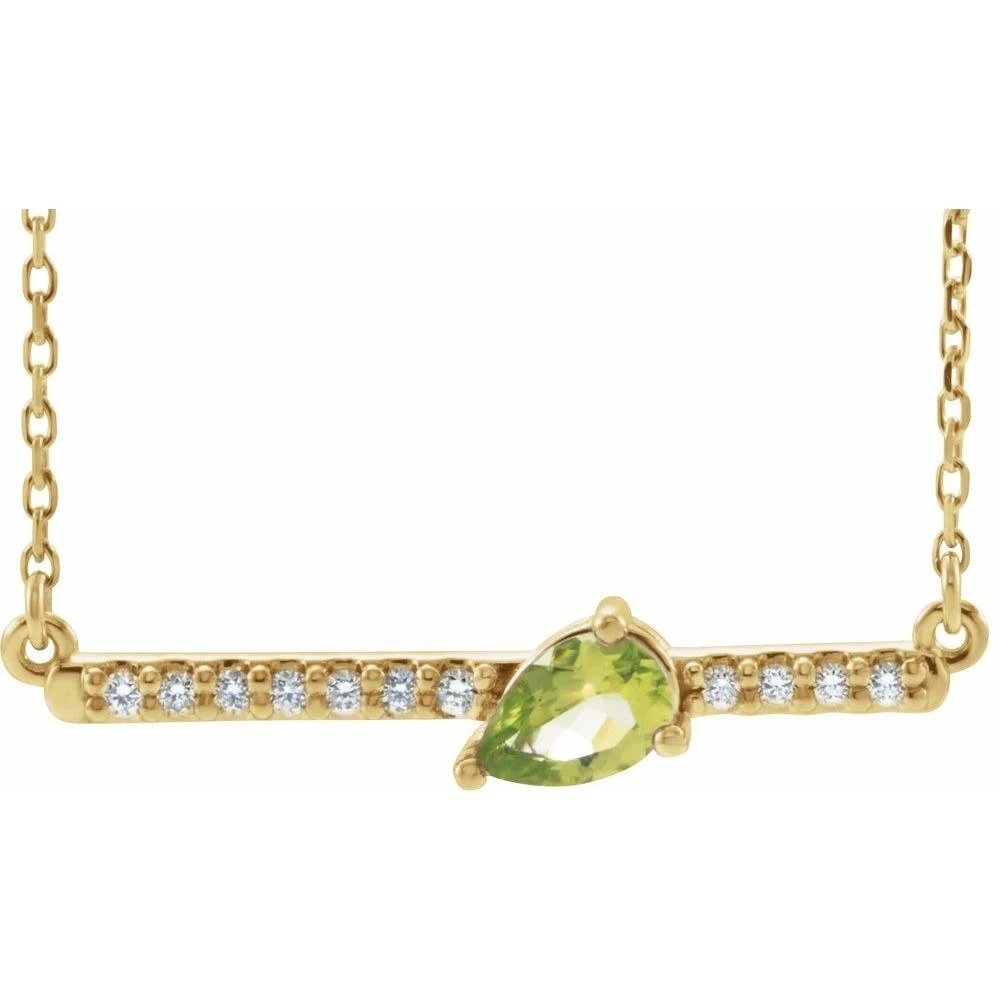
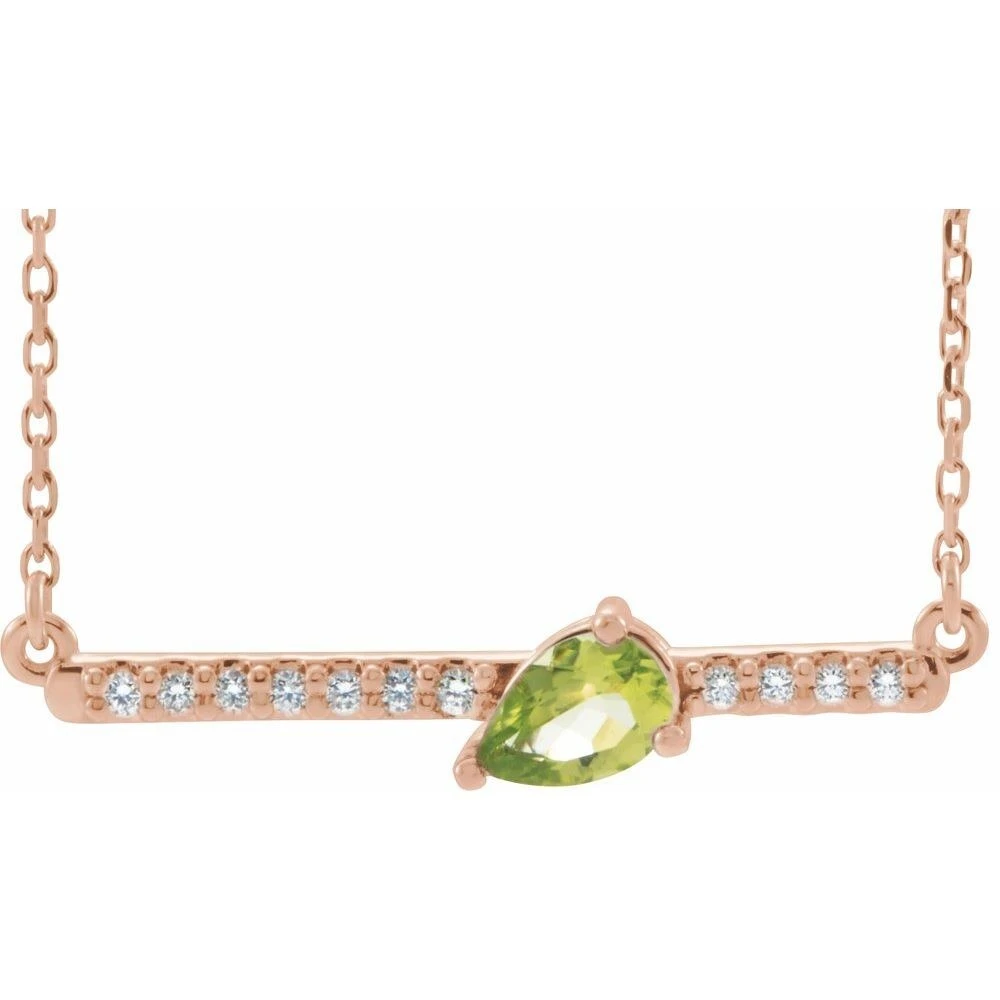
The Pear Peridot & Diamond Bar Necklace
The most architectural piece in the edit. A slim diamond-set bar lies flat along the collarbone, with a pear-cut peridot resting off-center — an asymmetry that keeps the design from feeling formal.
The rose gold version is the quiet surprise of the group: the warm blush of the metal pushes against the cool green in a way that makes both colors look more deliberate.
Best for the client who prefers modern design to traditional gemstone jewelry.
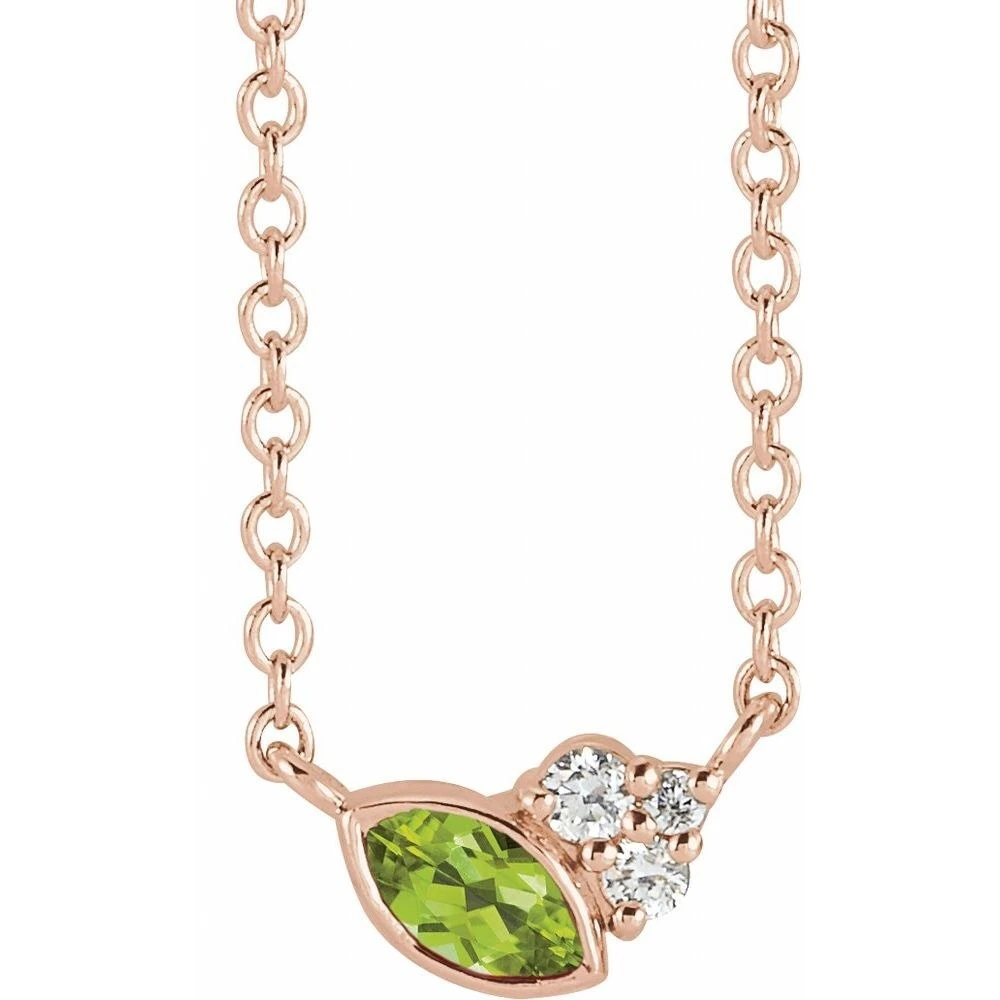
The Marquise Peridot & Diamond Cluster Necklace
The smallest piece here and, for many clients, the most wearable. A marquise-cut peridot is bezel-set beside a small cluster of round diamonds on a rose gold cable chain — an off-balance composition that looks less like a birthstone necklace and more like something found.
Best for daily wear, and for gifting to someone who doesn’t wear much jewelry.
How to style peridot
Layer it, don’t isolate it. Peridot’s warmth means it plays well with other stones — pair it with white diamonds for contrast, or with citrine and yellow gold for a tonal, sunlit effect.
Consider the metal seriously. Yellow gold amplifies peridot’s warmth and reads traditional. White gold and platinum cool the stone and sharpen it toward pure green. Rose gold creates the most contemporary contrast of the three. The same stone can look like three different gems.
Wear it against neutrals. Peridot is at its most striking against cream, camel, white, navy, and charcoal — and it is beautiful against black tie, where it reads as an unexpected alternative to the usual diamonds.
Scale down for day, up for evening. A single briolette station necklace disappears comfortably into a working wardrobe. A halo pendant at 8mm or above does not — and shouldn’t.
Caring for peridot
Peridot’s hardness of 6.5 to 7 places it below sapphire, ruby, and diamond. It is entirely suitable for necklaces, pendants, and earrings — pieces that don’t take daily impact — and should be worn more thoughtfully in rings.
Do
- Clean with warm water, mild dish soap, and a soft-bristle brush
- Store separately, ideally in a soft pouch, so harder stones cannot scratch it
- Remove before swimming, cleaning, or applying fragrance and lotion
Never
- Use an ultrasonic or steam cleaner — peridot is vulnerable to thermal shock and can fracture
- Expose it to acids, including household cleaners and, over time, acidic perspiration
- Leave it beside a heat source or subject it to sudden temperature change
If a piece has dulled, bring it in. We clean and inspect peridot jewelry by hand at our Hillcroft showroom, and it takes only a few minutes.
Choosing peridot as a gift
August birthdays fall in the least convenient month of the year for gifting — the middle of summer, when everyone is traveling and nothing is scheduled. Which is exactly why a considered birthstone piece lands so well.
Peridot carries centuries of association with protection, prosperity, and renewal — a gem given at the turn of a year, meant to be worn into the next one. It is also a generous gemstone in practical terms: large, clean stones are attainable in a way that emerald and fine tourmaline are not, so a piece can have real presence without extravagance.
Common questions about peridot
What month is peridot the birthstone for?
Peridot is the birthstone for August. August has three birthstones in total: peridot, spinel (added in 2016), and sardonyx, the older traditional stone.
Is peridot a valuable gemstone?
Peridot is valued but attainable. Fine grass-green stones with strong saturation command the highest prices, and large clean specimens above 10 carats are genuinely scarce. Compared with emerald of similar size and clarity, peridot offers considerably more presence for the money — which is why it is such an effective gift stone.
How hard is peridot, and can I wear it every day?
Peridot rates 6.5 to 7 on the Mohs scale. That is durable enough for daily wear in necklaces, pendants, and earrings, which are not subject to regular impact. In rings it needs more care: a protective bezel or halo setting is advisable, and the ring should be removed for manual work.
How do you clean peridot jewelry?
Use warm water, a mild dish soap, and a soft-bristle brush, then dry with a soft cloth. Never use an ultrasonic or steam cleaner — peridot is vulnerable to thermal shock and can fracture. Keep it away from acids, including household cleaners.
What does peridot symbolize?
Peridot has traditionally symbolized protection, prosperity, and renewal. In the ancient world it was set in gold and worn as a talisman against evil and against night terrors.
Why is peridot always green?
Because its color is idiochromatic — caused by iron that is a fundamental component of the crystal structure rather than a trace impurity. Gems that take their color from impurities, such as sapphire and tourmaline, can occur in many colors. Peridot cannot.
Where can I buy peridot jewelry in Houston?
Karat 22 Jewelers carries peridot necklaces, pendants, and birthstone jewelry at 5623 Hillcroft Ave in Houston, and has served the city for more than 40 years. Pieces can be viewed side by side across yellow, white, and rose gold, and specific stones can be sourced on request.
Serving Houston for more than 40 years
See it in person
That lit-from-within quality is difficult to capture on a screen — the green tends to photograph flat, and in the hand it is anything but.
Our August peridot selection is on display now at Karat 22 Jewelers, 5623 Hillcroft Ave, Houston. We’re happy to show pieces side by side across metals, discuss sizing and layering, or source a specific stone.