

Sapphire: The September Birthstone in Every Color but Red
Posted by The Karat 22 Gemology Team on Sep 14th 2026
Every color but red - and hard enough to wear every day.
Ask most people to picture a sapphire and they will picture one thing: a deep, velvety blue. They are right about the most famous sapphire and wrong about sapphire itself.
September’s birthstone is the gem variety of corundum, and corundum occurs in nearly every colour there is. Pink, yellow, green, violet, orange, colourless, and a pinkish-orange so particular it has its own name. Only one colour is excluded, and only by convention: red corundum is called ruby. Everything else is sapphire.
That makes sapphire unusually generous as a birthstone. Blue is the classic, and blue is what most September clients want. But a yellow sapphire is just as legitimately a September stone, and for some people it is the better one.
In brief
Sapphire is the birthstone for September, and the sole one — unlike August or June, there is no alternate. It is the gem variety of corundum, and occurs in every colour except red, which is classified as ruby instead.
It rates 9 on the Mohs scale with excellent toughness and no cleavage, which makes it the most practical coloured stone for everyday wear and for engagement rings. Warm soapy water is always safe to clean it.
Most sapphire on the market has been heat-treated to improve colour and clarity. This is a stable, permanent, industry-accepted treatment that must be disclosed. Sapphire is also the traditional gem for the 5th and 45th anniversaries.
What actually makes a sapphire blue
The answer is stranger than it sounds, and it is one of the few pieces of gemology worth knowing as a buyer.
Blue sapphire gets its colour from two elements working as a pair: iron and titanium. When light strikes the stone, an electron transfers between an adjacent iron and titanium ion in the crystal lattice, absorbing part of the spectrum and leaving blue behind. Gemologists call it intervalence charge transfer.
The part worth remembering is this: neither element produces any colour on its own. Iron alone gives you nothing. Titanium alone gives you nothing. The blue exists only where the two sit together, in the right proportion, in the right places. Add more iron and the blue deepens toward navy. It is a remarkably narrow set of conditions, which is a large part of why fine blue sapphire is scarce.
| Property | Detail |
|---|---|
| Mineral | Corundum |
| Colour | Every colour except red; finest blue is a velvety violetish blue in medium to medium-dark tone |
| Mohs hardness | 9 |
| Cleavage | None |
| Refractive index | 1.762 – 1.770 |
| Birthstone month | September |
| Anniversaries | 5th and 45th |
Every colour but red
The colours other than blue are worth knowing, because they are frequently better value and they photograph beautifully.
- Pink — coloured by chromium, the same element that makes ruby red. The line between a pink sapphire and a ruby is a judgement call, and laboratories genuinely disagree on where to draw it.
- Yellow — from iron, in two quite different mechanisms. The strongly coloured yellows need only a few parts per million to reach full saturation.
- Green and purple — from vanadium, purple at higher concentrations, green at lower.
- Padparadscha — the rarest and most argued-over. A pinkish orange named from the Sanskrit padmarāga, the colour of a lotus blossom. Sri Lankan in origin and Sri Lankan in spirit, though the modern Western definition was written by gemological laboratories rather than by the dealers who named it.
- Colour-change — blue in daylight, shifting to purple or violet under incandescent light.
The stone that wasn’t always sapphire
There is a genuine historical puzzle buried in sapphire’s name, and almost nobody selling sapphire mentions it.
The word descends through Latin sapphirus from the Greek sappheiros. But the stone the Greeks called sappheiros was, in all likelihood, not corundum at all — it was lapis lazuli. Which means that a great many classical and scriptural references to “sapphire” are almost certainly references to a completely different, opaque blue stone.
Sapphire spent its first thousand years wearing someone else’s name.
What we can say with confidence begins later. Medieval clergy wore sapphire because blue signified Heaven; the cardinal’s ring is traditionally sapphire-set to this day. The Persians held that the earth rested on an enormous sapphire, and that the sky took its colour from the reflection. Greeks and Romans wore it as protection against harm and against envy.
The stones themselves survive in places worth visiting. The Logan Sapphire, a 423-carat Sri Lankan cushion set in a brooch of twenty diamonds, is the largest mounted gem in the Smithsonian’s National Gem Collection. The Star of India, 563 carats and unusual for showing a star on both faces, sits in the American Museum of Natural History — from which it was famously stolen in 1964 and recovered, uninsured, from a Miami bus locker three months later.
Where sapphire comes from
- Kashmir — the most celebrated of all. Discovered in the early 1880s and largely worked out within a decade. Its famous sleepy, velvety texture comes from microscopic particles arranged in bands that scatter light inside the stone. Kashmir sapphires still set auction records; they are essentially no longer produced.
- Myanmar (Mogok) — second only to Kashmir in reputation, and a far wider tonal range than its old “too dark” reputation suggests.
- Sri Lanka (Ceylon) — over two thousand years of continuous production. The Arabs called the island Serendib, which gave English the word serendipity. Lighter, brighter blues, the widest colour range of any source, and the home of padparadscha.
- Madagascar — discovered in 1998 and, within a decade, probably the largest producer in the world.
- Montana — American sapphire. The Yogo deposit yields an even cornflower blue that needs no heat at all, though rarely above half a carat.
- Australia, Thailand, Nigeria, Ethiopia — Australia supplied most of the world’s sapphire in the 1980s; Thailand remains the centre of global cutting and heating.
One honest caveat, since origin is quoted so freely in this trade: geographic origin on a laboratory report is an opinion, not a fact. Every major lab says so on the report itself. Localities overlap, laboratories disagree, and heat treatment destroys much of the evidence used to make the call. Origin is a provenance premium. It is not a substitute for judging the colour, clarity and cut of the stone in front of you.
About heat treatment
This is the question a good jeweler should answer before being asked.
Most sapphire sold anywhere in the world has been heated. The stone is brought to temperatures above 1,300 °C, which dissolves the microscopic rutile “silk” that clouds the crystal and frees titanium into the lattice, where it pairs with iron and deepens the blue. What comes out is clearer and more saturated than what went in.
Three things follow from that, and all three are good news:
- Heat treatment is permanent and stable. It does not fade, wash out, or require special care.
- It is an accepted practice, recognised by GIA and the American Gem Trade Association, and it is the reason fine sapphire is affordable at all.
- It must be disclosed. That is not a courtesy; it is a requirement under the Federal Trade Commission’s guides for the jewelry industry.
Two treatments are a different matter, and they are worth knowing the names of. Lattice diffusion drives colour into the stone from outside; where the colour layer is shallow, a re-polish can remove it, and such stones are worth considerably less. Glass filling fills fractures with lead glass and leaves a stone so fragile that lemon juice can damage it. Both must be disclosed too.
Untreated sapphire of fine quality exists and commands a premium, for a straightforward reason: a stone that is already beautiful without intervention belongs to a much smaller population. If a stone is being sold as unheated, ask for a report from GIA, AGL, SSEF or Gübelin. Low-temperature heating is often undetectable by eye, which is precisely why the paperwork matters.
The Karat 22 Edit
The September collection
Our sapphire selection is deep blue throughout and largely 18-karat — a distinction worth making, since much of what is sold as fine sapphire jewelry is set in 14. Everything below is in stock in Houston, and every piece is photographed on the hand as well as on white, because blue behaves differently against skin.
| Piece | Metal | Price |
|---|---|---|
| Deep Blue Sapphire Station Chain Bracelet | 14K yellow gold | $2,250 |
| Five-Stone Sapphire & Diamond Halo Ring | 18K white gold | $3,790 |
| Royal Blue Sapphire Floral Cluster Necklace | 18K white gold | $3,850 |
| Royal Blue Sapphire Stackable Ring | 18K white gold | $4,310 |
| Deep Blue Sapphire Line Bracelet | 14K white gold | $6,250 |
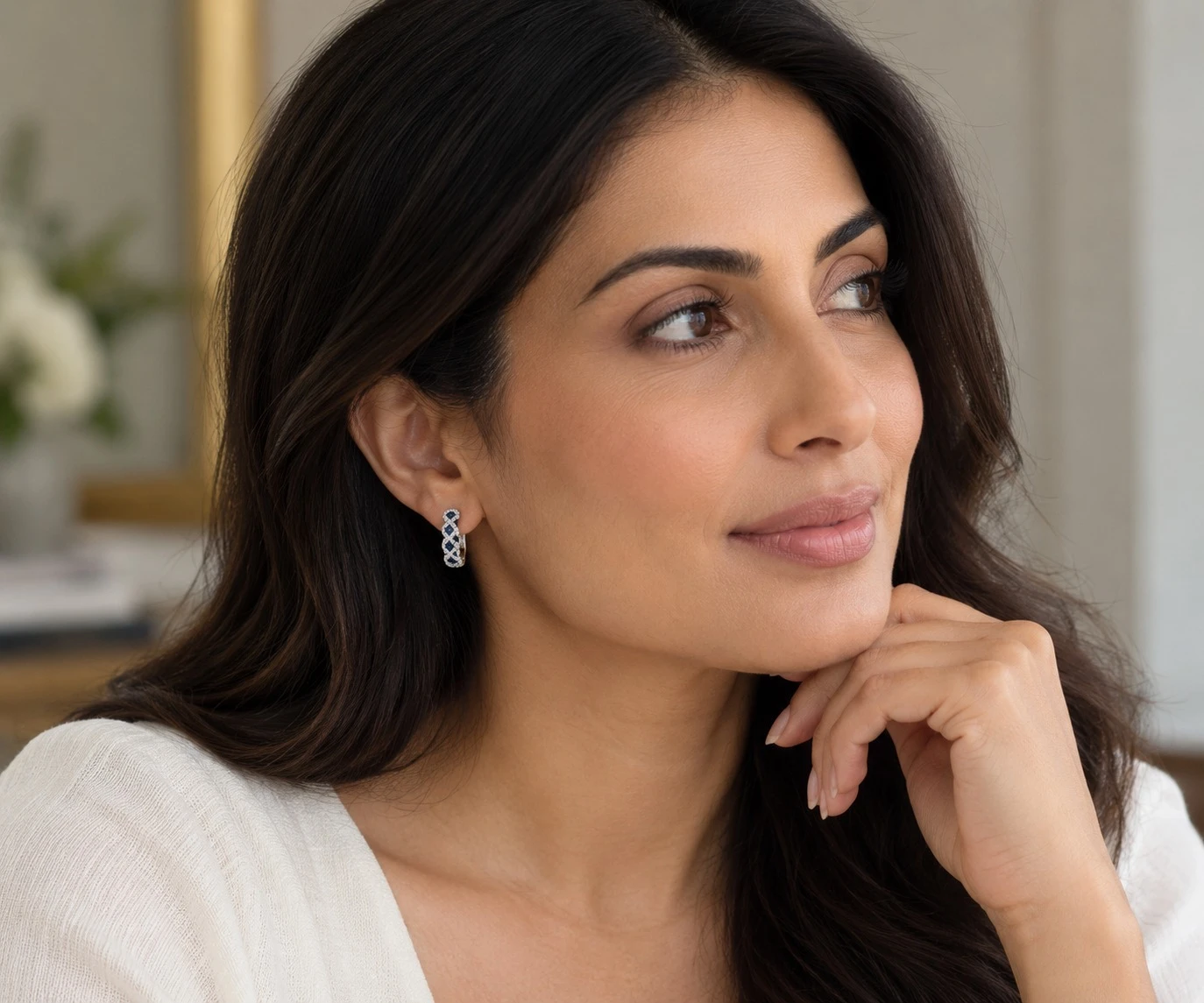
| Royal Blue Sapphire Crisscross Hoop Earrings | 18K white gold | $7,195 |
| Alternating Sapphire & Floral Cluster Bangle | 18K yellow gold | $12,500 |
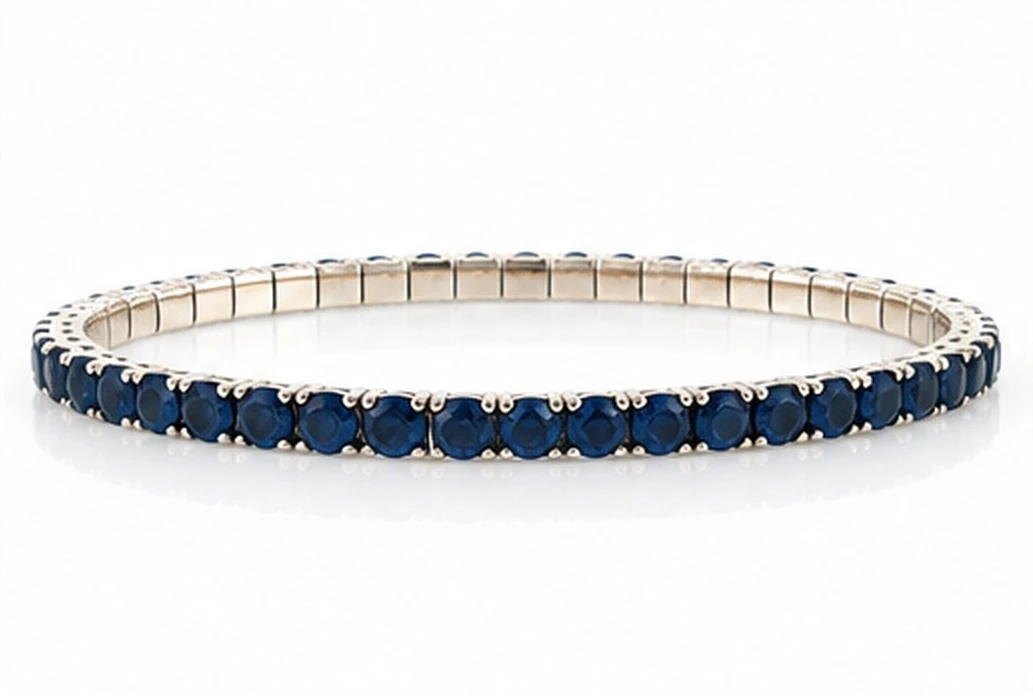
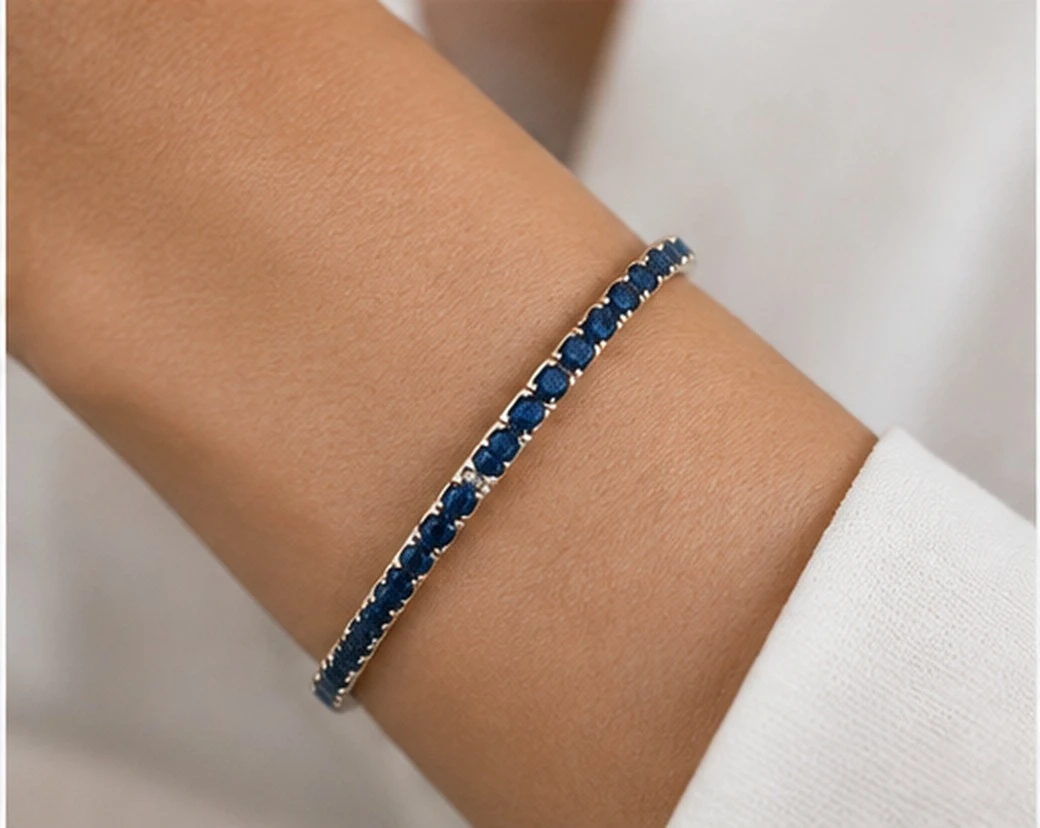
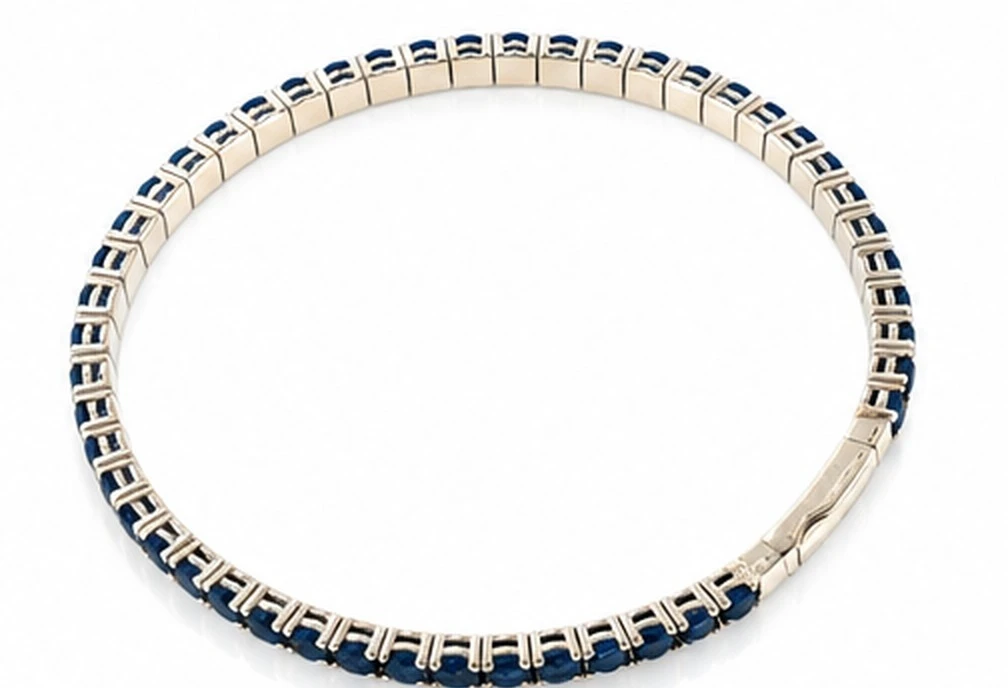
Deep Blue Sapphire Line Bracelet — 14K white gold
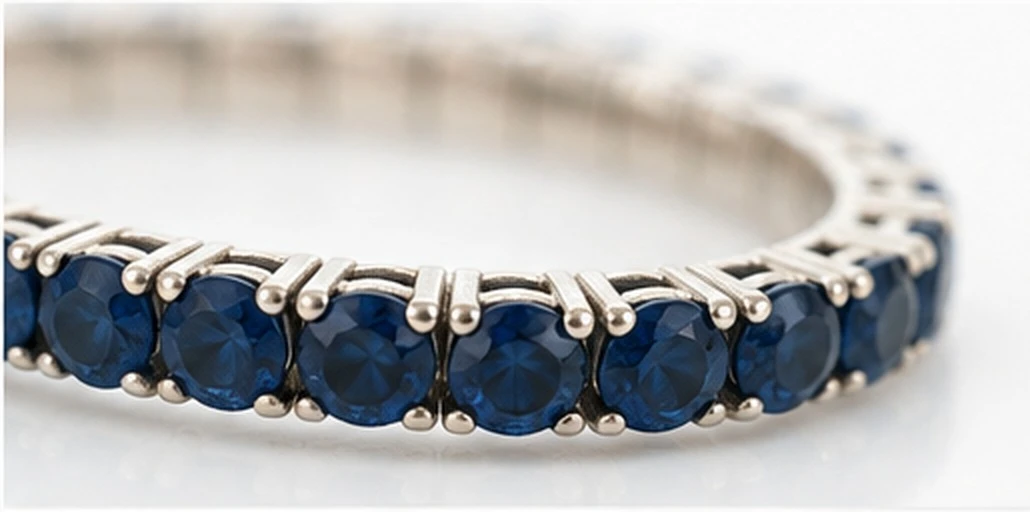
An unbroken row of prong-set round sapphires, the coloured-stone answer to a diamond tennis bracelet. This is the piece in the collection with genuine presence: worn alone it is enough, and against a white shirt it is very hard to look away from.
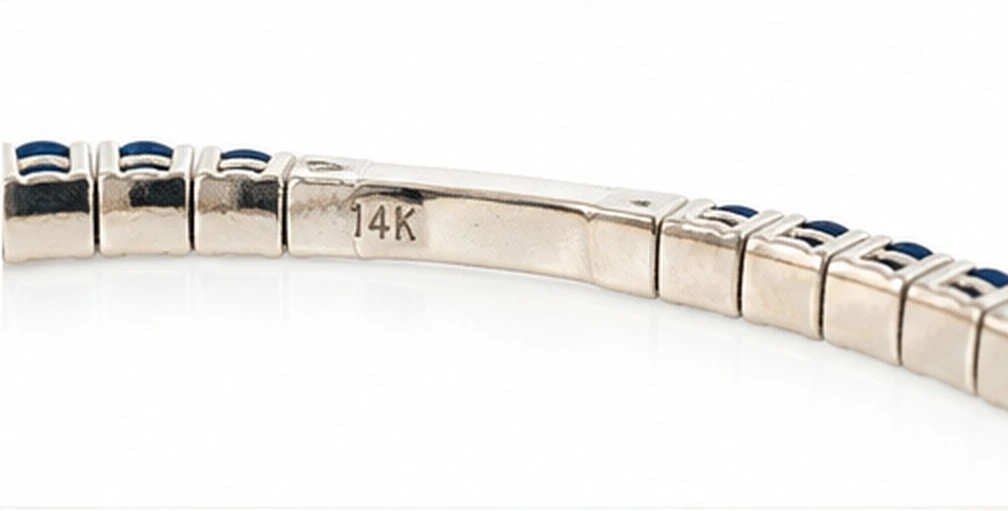
It is one of only two pieces here set in 14K rather than 18 — and we would rather show you the hallmark than have you wonder.
$6,250. View this piece
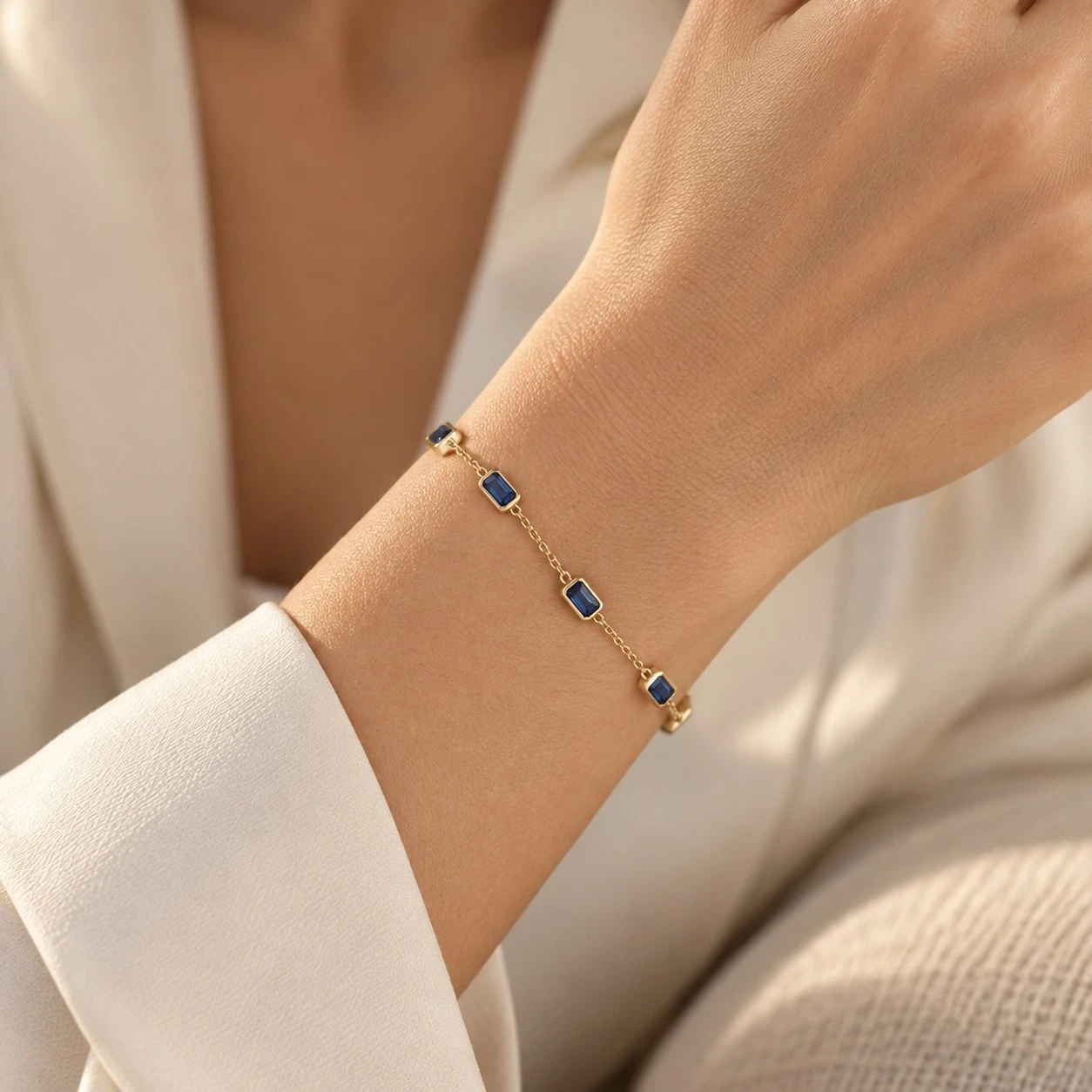
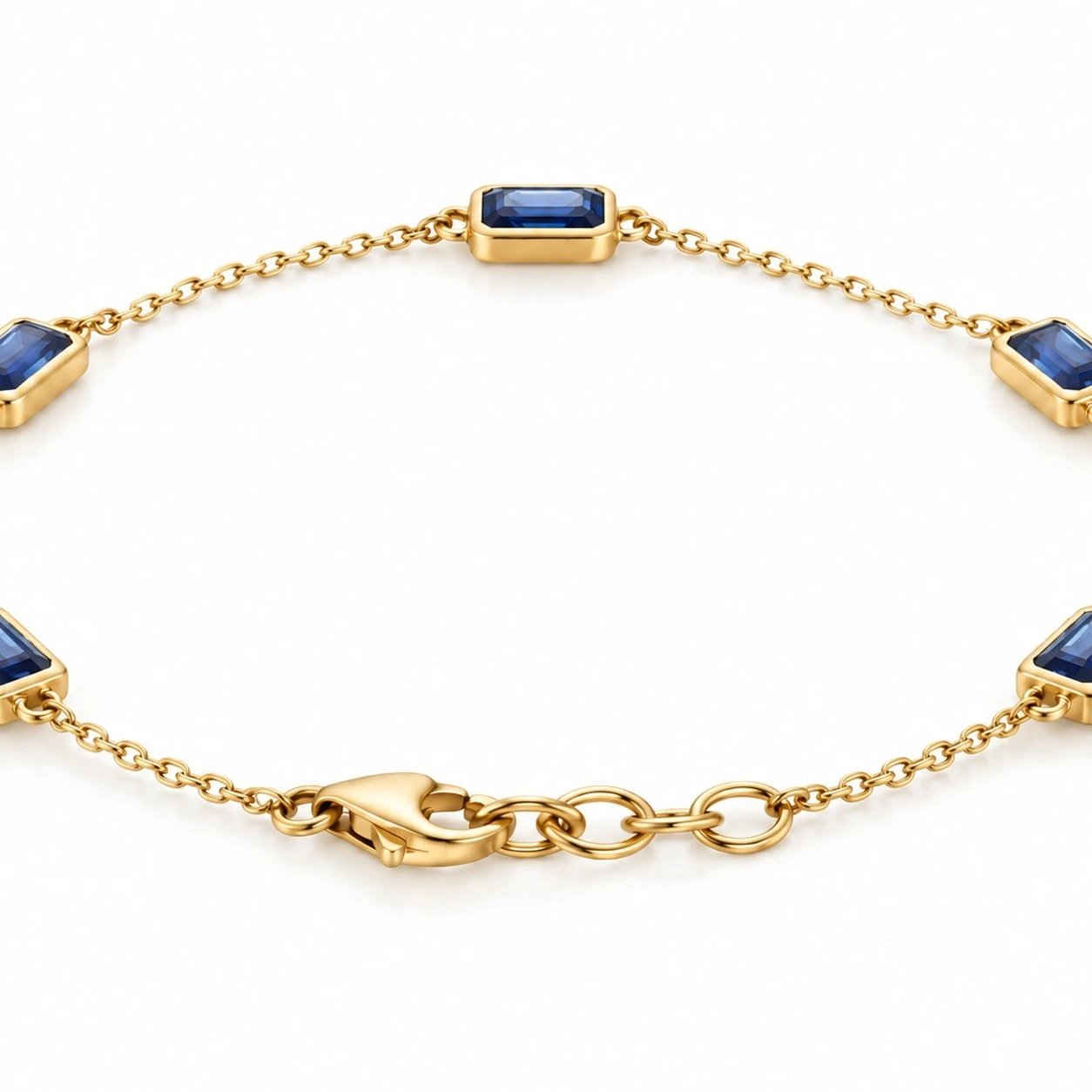
Deep Blue Sapphire Station Chain Bracelet — 14K yellow gold
Five emerald-cut sapphires bezel-set along a fine yellow chain, seven inches with adjustable links. The quietest thing we carry in sapphire and, for that reason, the one most likely to be worn daily.
The bezel is doing real work here: it protects the edges of a step-cut stone, which is the part most likely to take a knock. It is also the natural entry point to the collection.
$2,250. View this piece
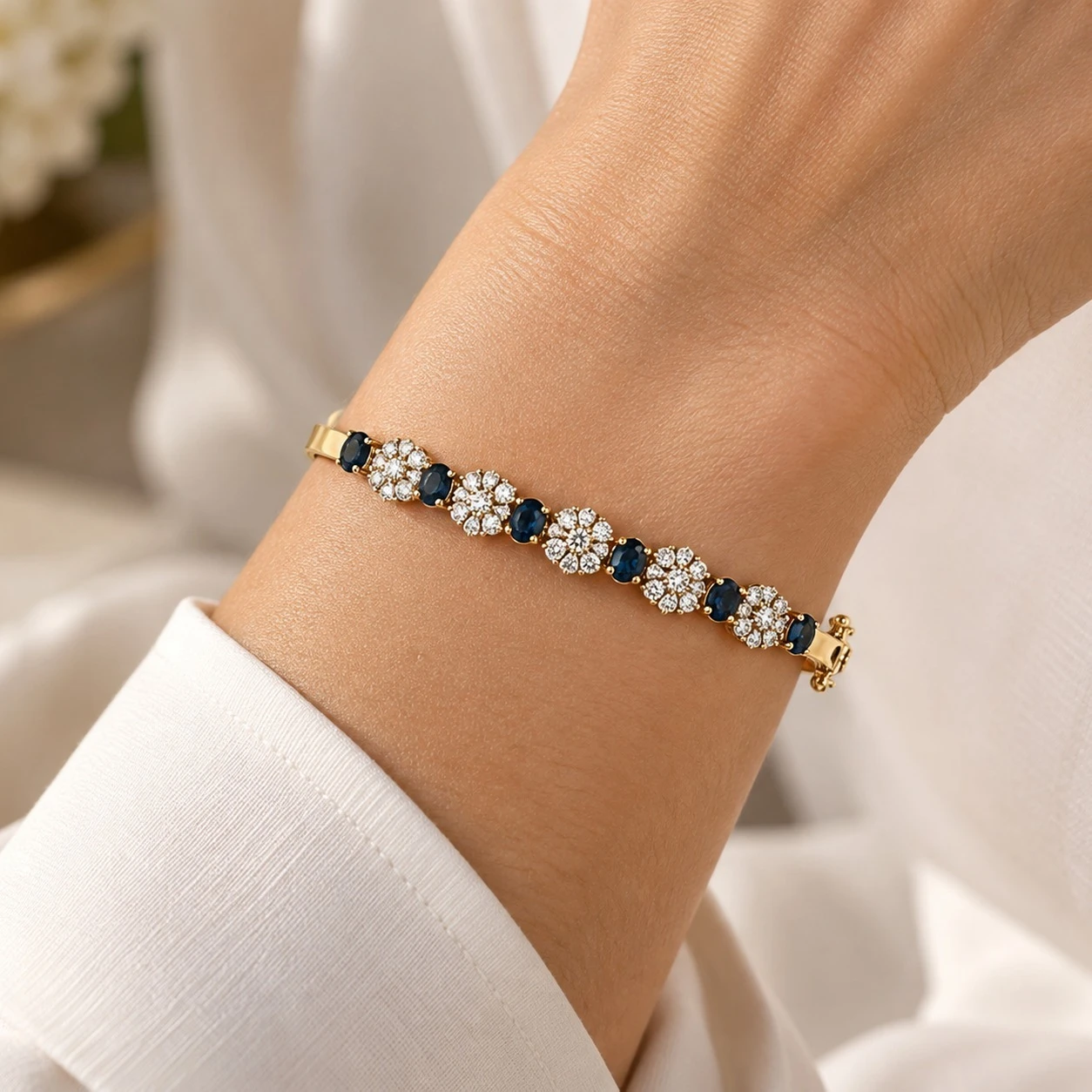
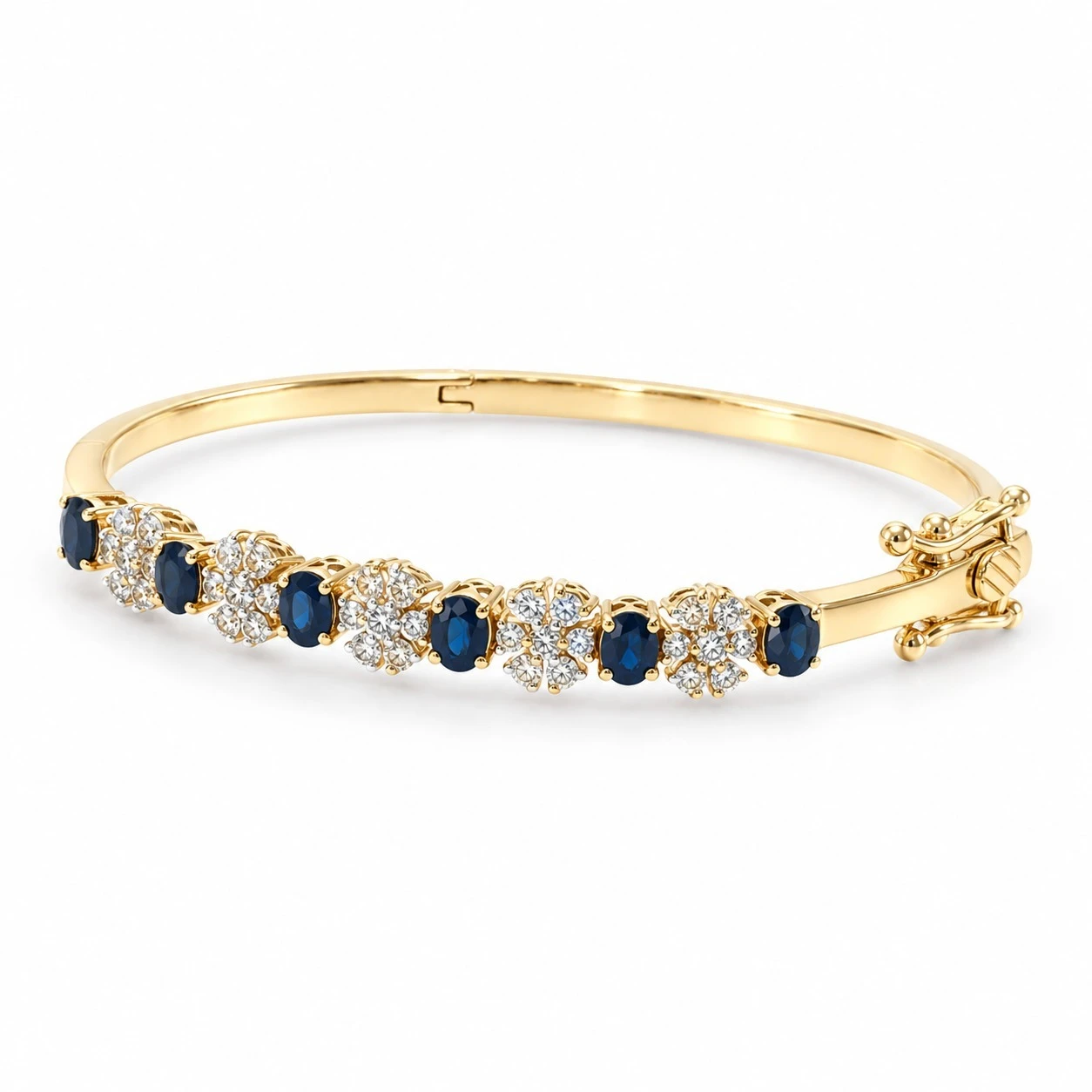
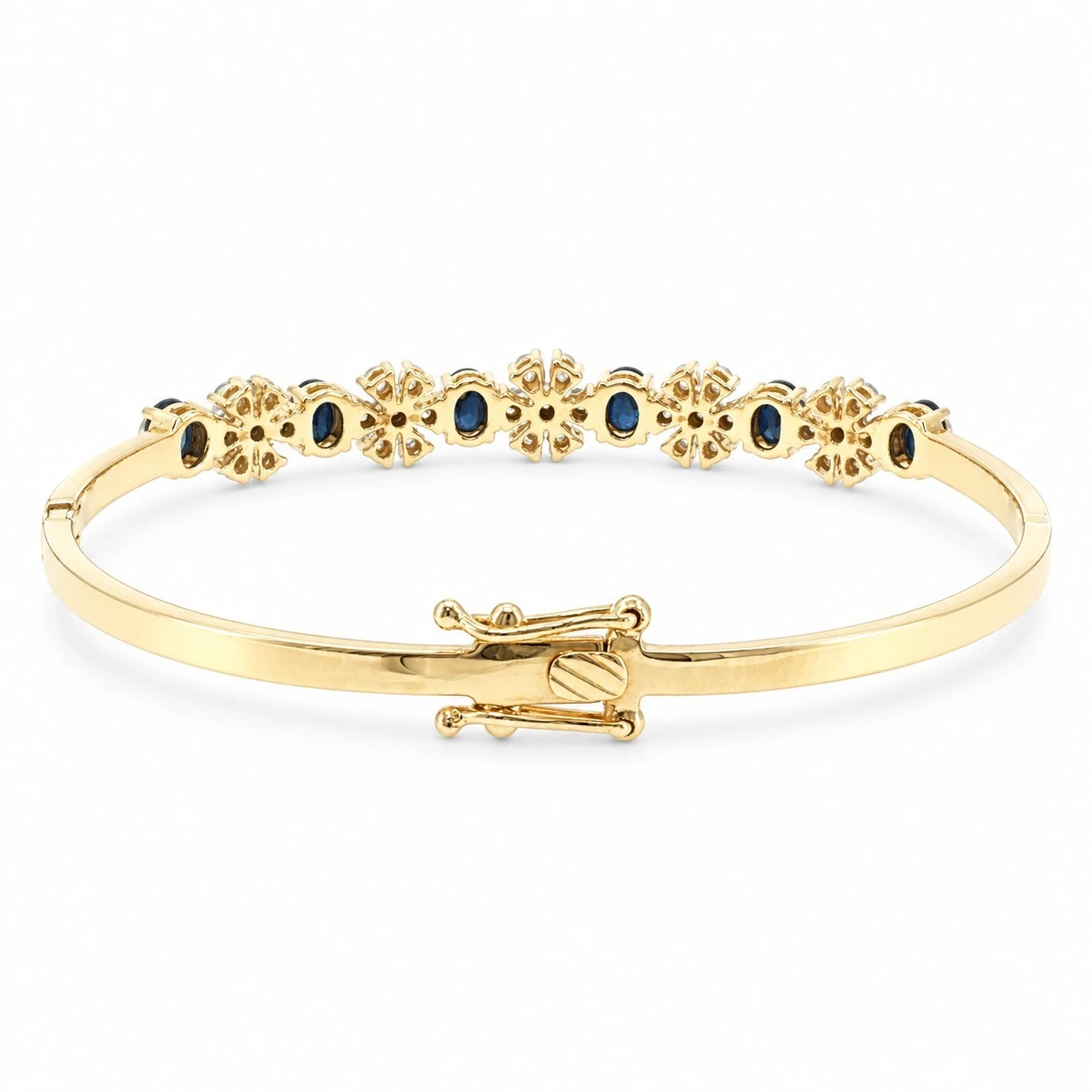
Alternating Sapphire & Floral Cluster Bangle — 18K yellow gold
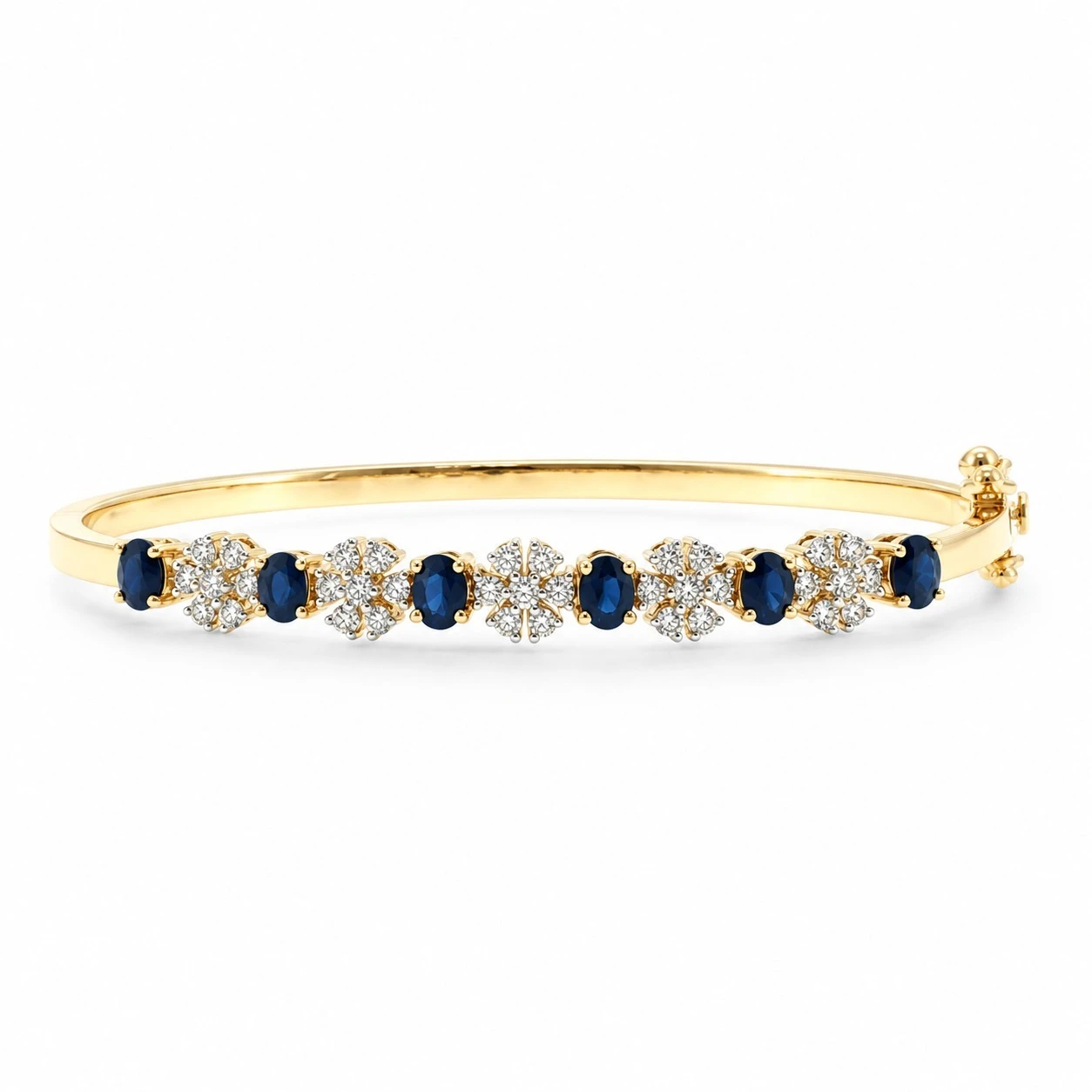
Oval sapphires alternating with diamond floral clusters, 0.68 carats of diamonds in total, on a hinged 18-karat bangle. The most considered piece in the edit and the one that reads as an heirloom rather than a purchase.
Turn it over and the case is made: an open gallery behind every cluster, pierced so light reaches the stones from beneath, and a figure-eight safety catch on the hinge.
$12,500. View this piece
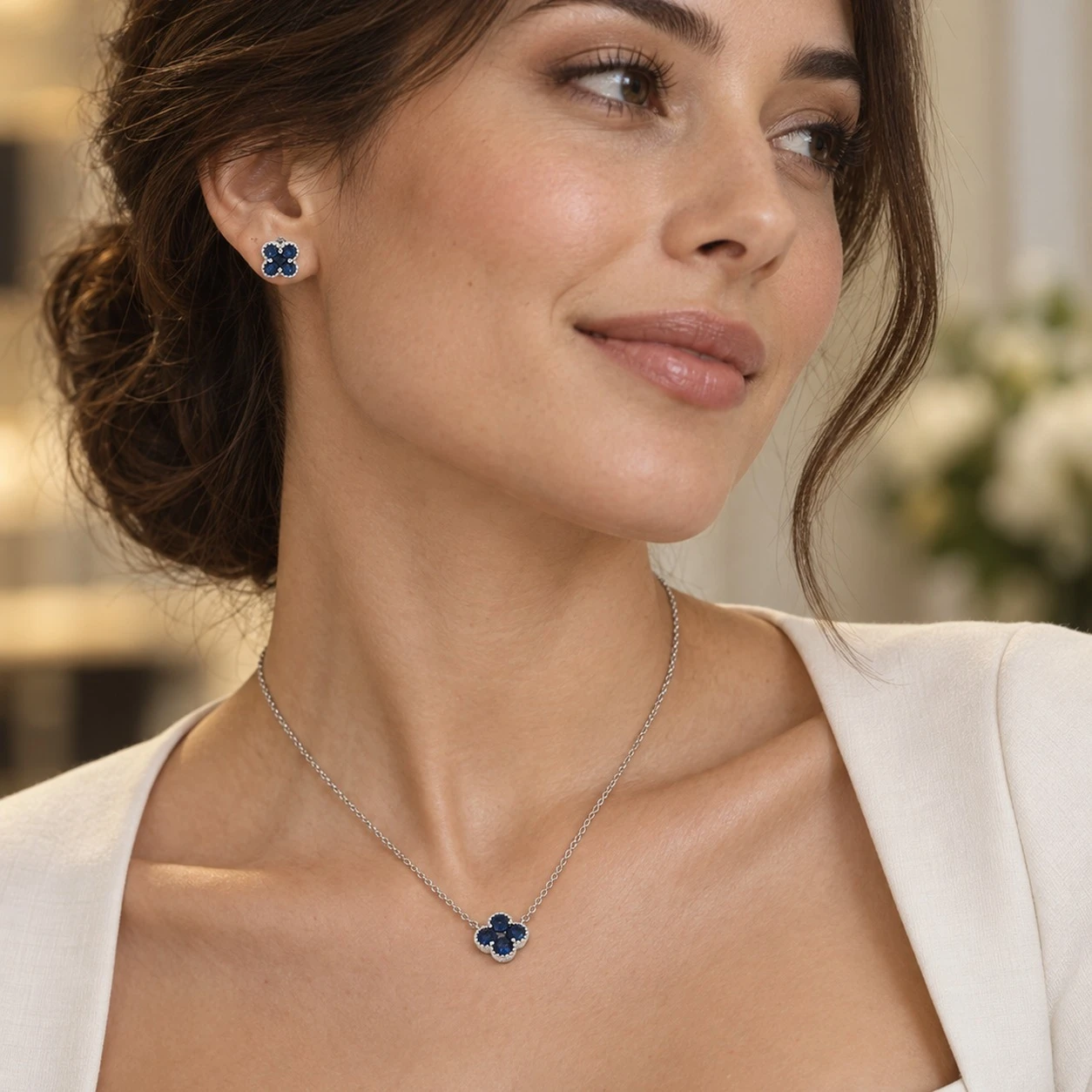
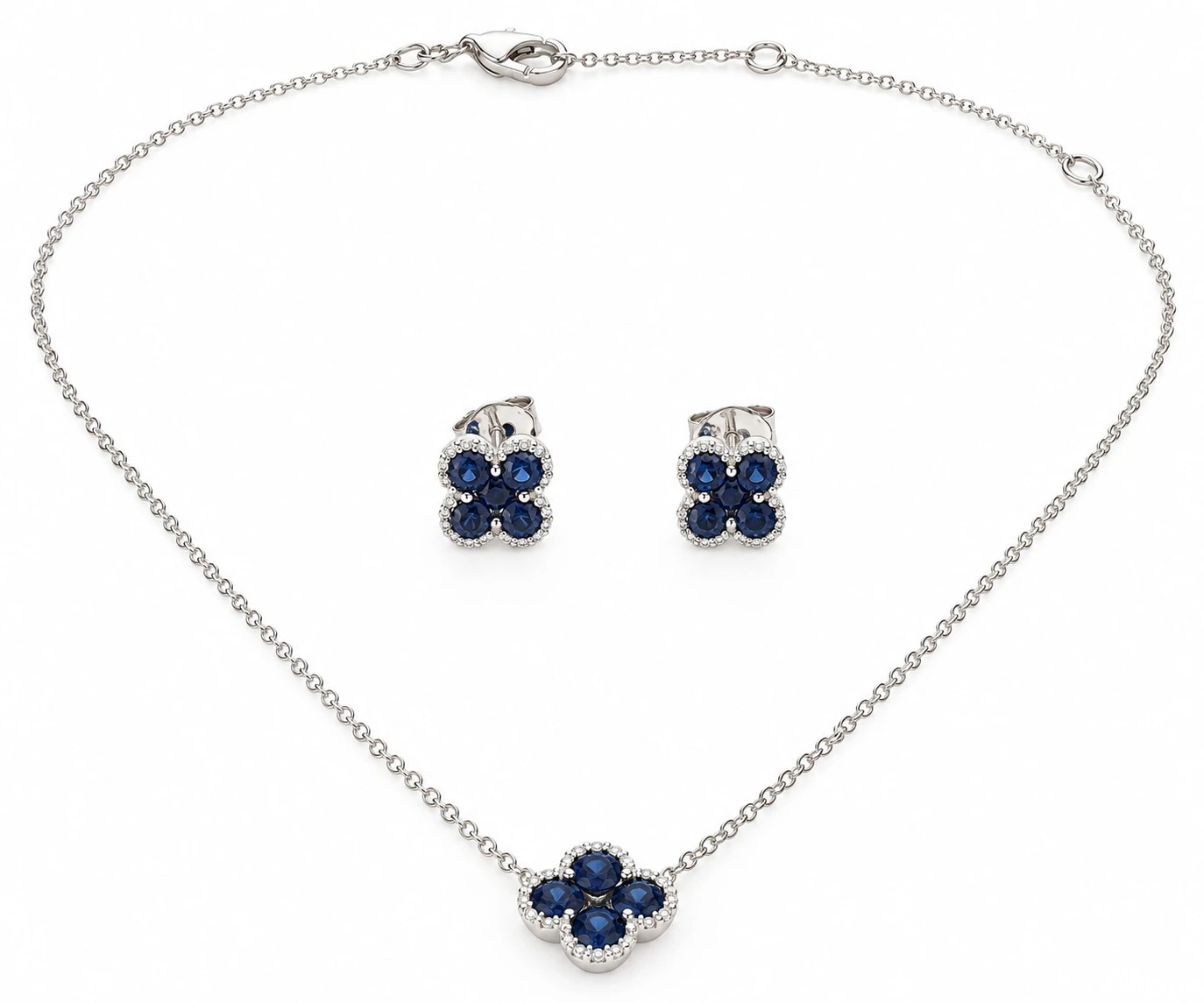
Royal Blue Sapphire Floral Cluster Necklace — 18K white gold
Four sapphires arranged as a small flower on a fine white gold chain, with matching studs. The cluster is the detail that makes it: at a distance it reads as a single blue point, and only close up does it resolve into four stones.
It sits just below the hollow of the throat, which is the length that works with an open neckline and a closed one both. The most giftable thing in the collection, and the piece we would put first for a September birthday.
$3,850. View this piece
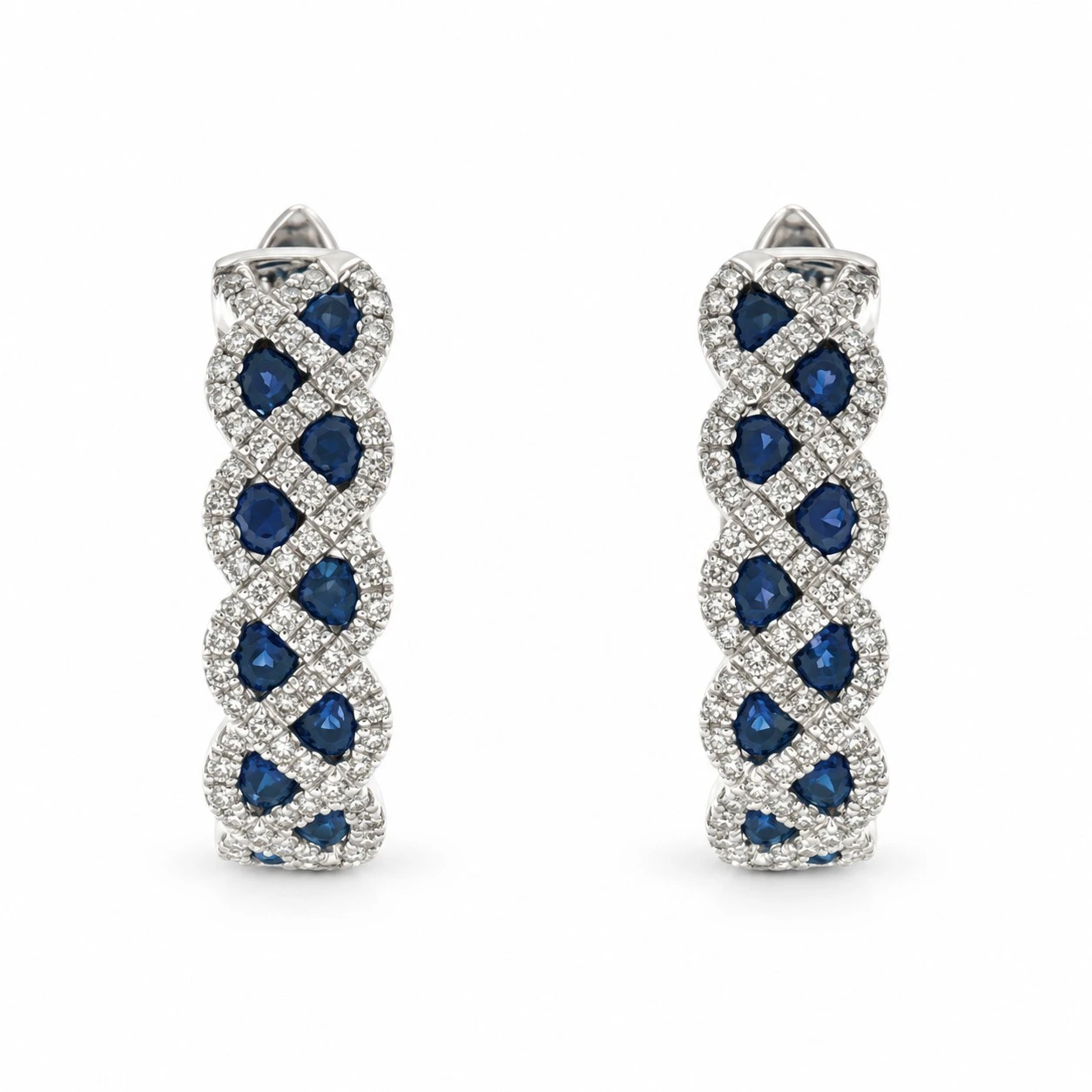
Royal Blue Sapphire Crisscross Hoop Earrings — 18K white gold
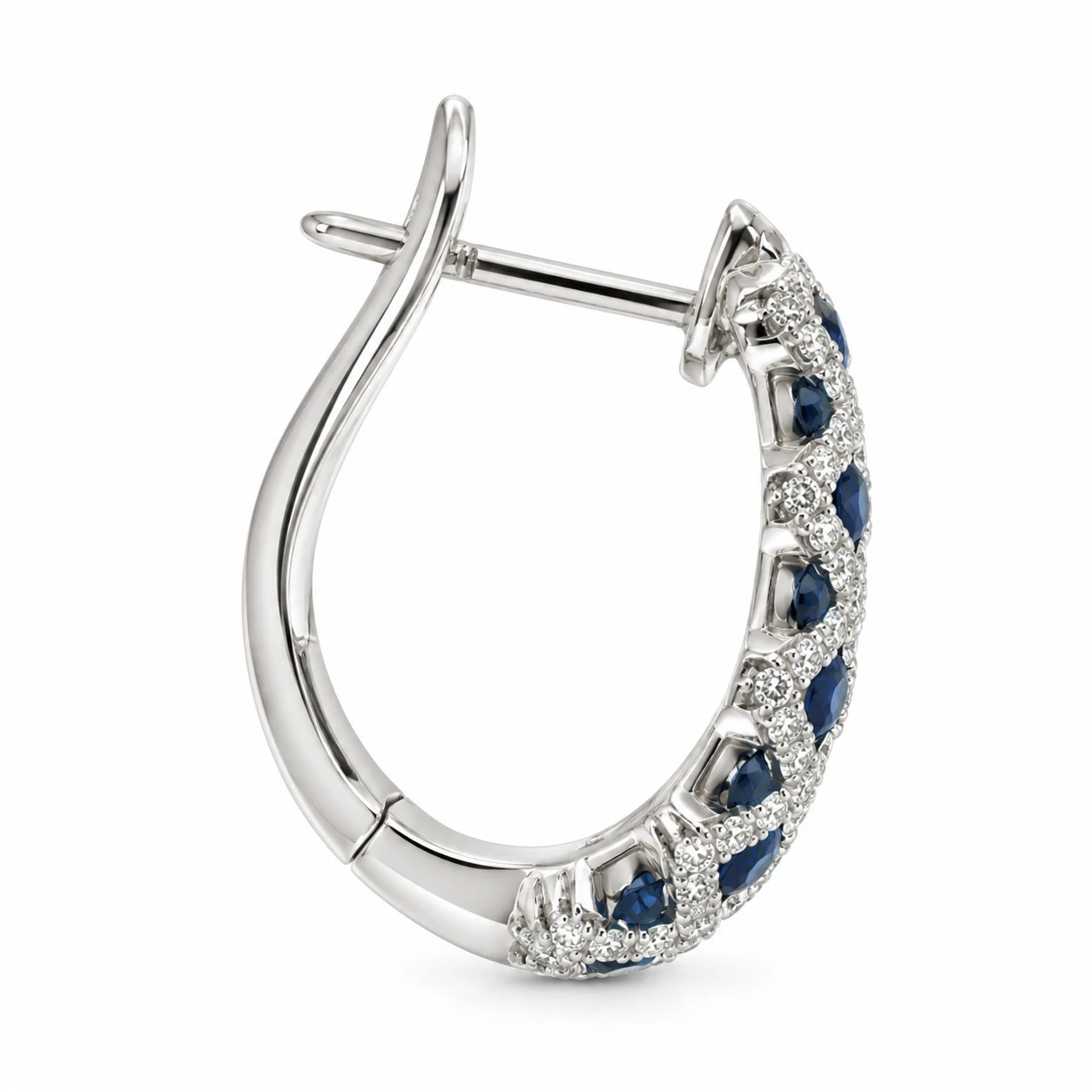
Sapphires and diamonds woven in a lattice across the face of the hoop, 0.30 carats of sapphire in total. The crisscross does something useful: it breaks the light up so the earrings move more than their size suggests.
They close on a hinged latch rather than a friction back — the detail that decides whether a pair of hoops gets worn or gets left in the box.
$7,195. View this piece
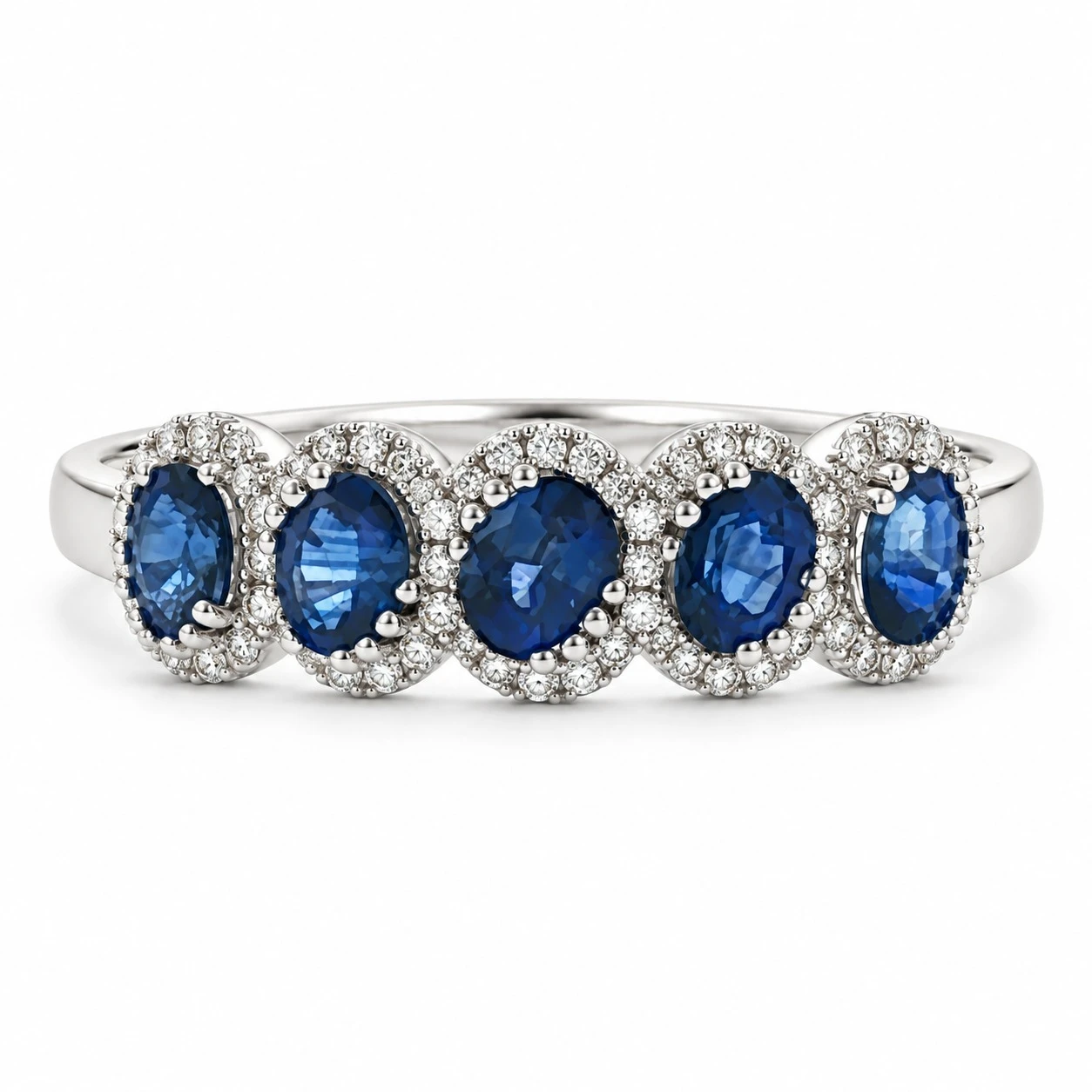
Five-Stone Sapphire & Diamond Halo Ring — 18K white gold
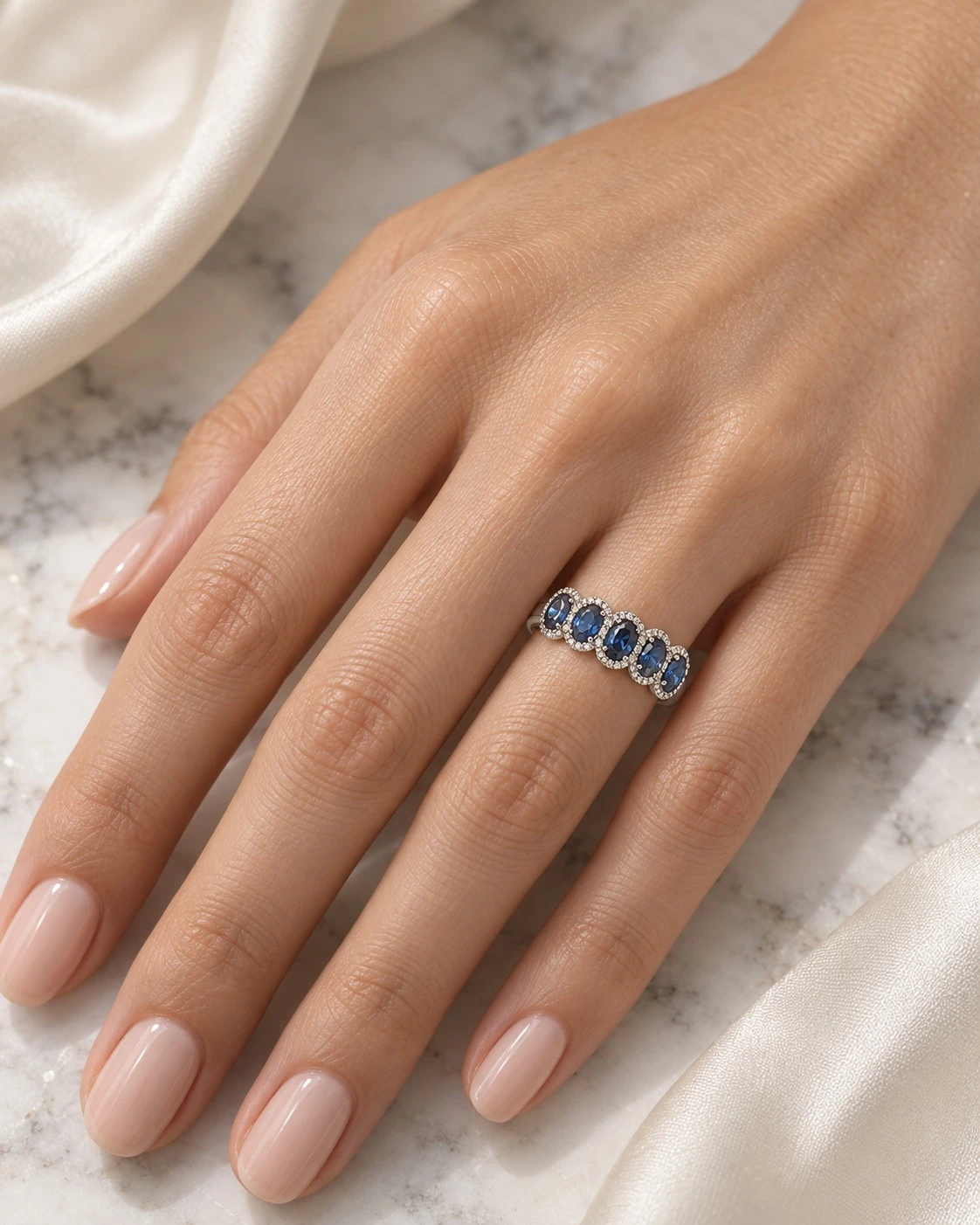
Five oval sapphires, each ringed by its own diamond halo. Worn alone it is a substantial right-hand ring; worn against a wedding band it is one of the better anniversary pieces we carry.
Five stones, incidentally, is the traditional five-year form — which makes this the obvious answer to a fifth anniversary, sapphire’s own.
$3,790. View this piece
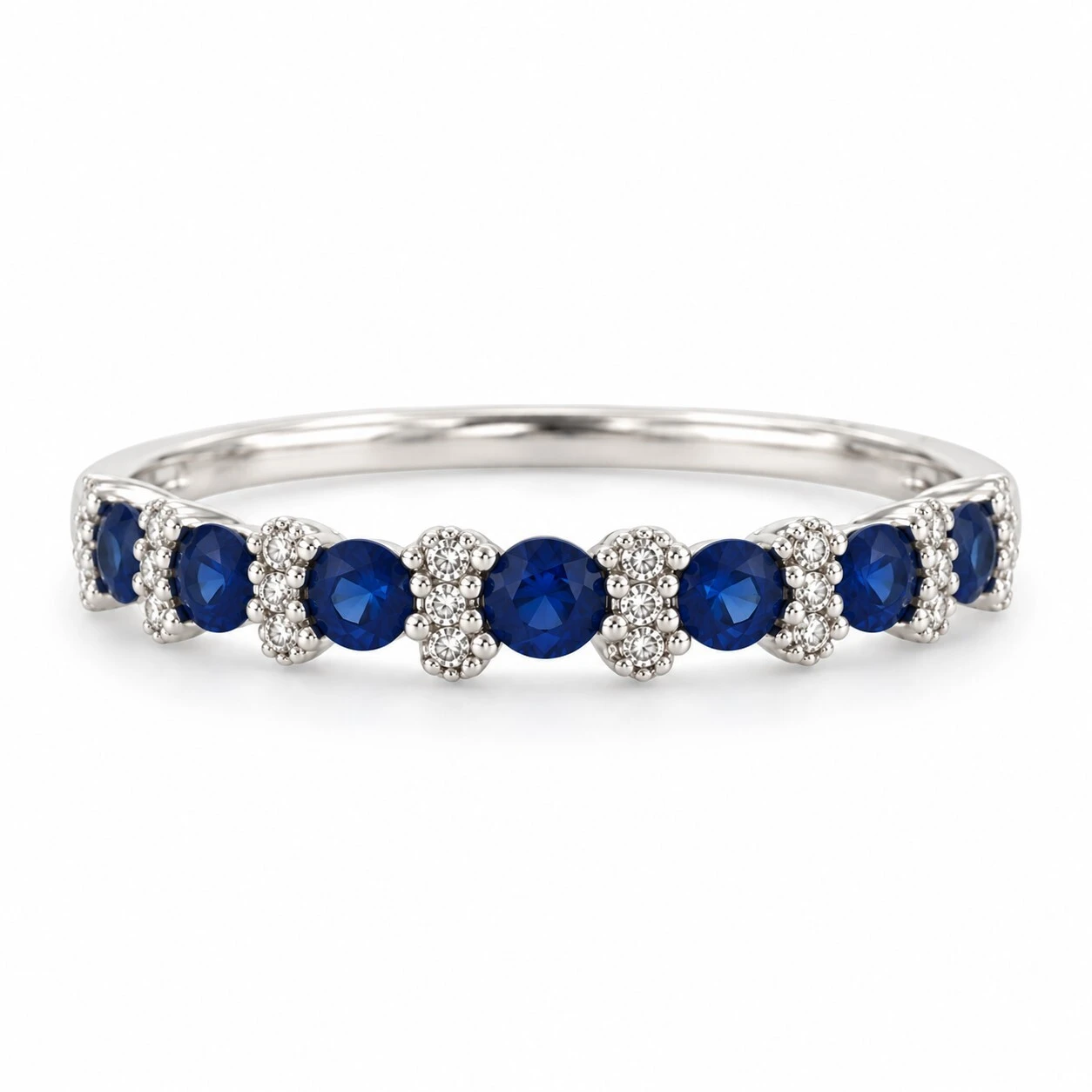
Royal Blue Sapphire Stackable Ring — 18K white gold
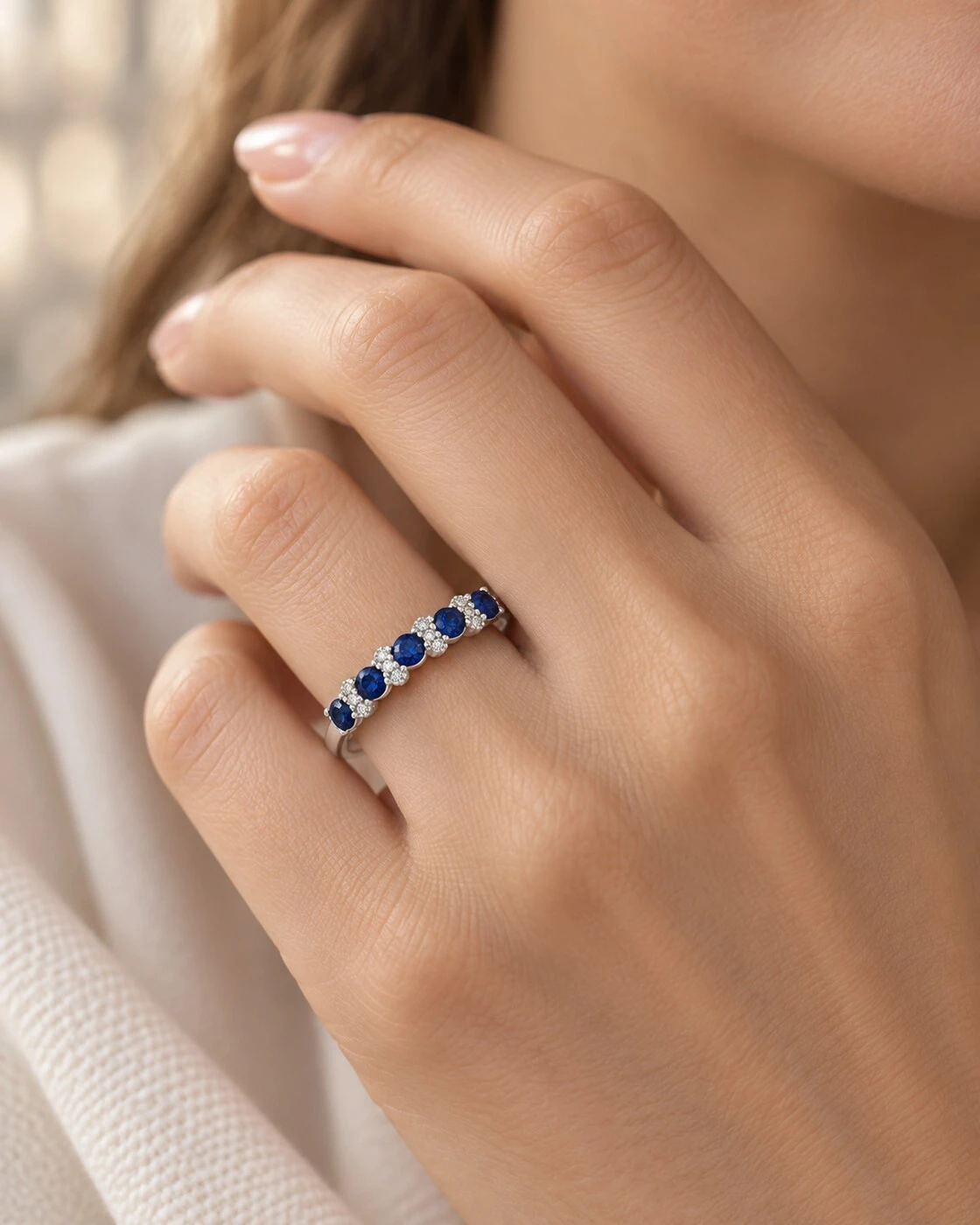
Round sapphires alternating with diamonds on a slim 18-karat band, light enough to stack and clean enough to wear alone. The piece to buy when someone already owns the statement ring.
$4,310. View this piece
Bridal
Sapphire as an engagement stone
The common framing is that a sapphire engagement ring is the alternative choice. The history says otherwise.
In 1796 Napoleon Bonaparte proposed to Joséphine with a toi et moi ring — a pear-shaped blue sapphire beside a pear-shaped diamond, roughly a carat each, in a plain gold band. It sold at auction in 2013 for €640,000 against an estimate of about twenty thousand.
That ring was not unusual for its moment. Coloured stones were ordinary in Georgian and Victorian betrothal rings, and sapphire was among the most common of them. The dominance of the diamond solitaire is a twentieth-century development — a marketing achievement, and a recent one. Choosing sapphire is not departing from tradition. It is returning to an older one.
The modern chapter is the ring Prince Charles gave Diana in 1981: a 12-carat oval Ceylon sapphire within fourteen round brilliant diamonds, 18-karat white gold, made by Garrard. Diana chose it herself. Prince William proposed to Catherine with the same ring in 2010, and she wears it still. It is probably the most-photographed engagement ring in the world.
Why it holds up to daily wear
This is the practical case, and it is stronger than the one usually made for it.
Sapphire is often sold as “almost as hard as diamond.” That is misleading — the Mohs scale is ordinal, not proportional, and the gap between corundum at 9 and diamond at 10 is very large indeed.
The real argument is different and better. Diamond has perfect cleavage in four directions. Sapphire has none at all. Cleavage is a plane along which a stone can split from a single unlucky knock. A diamond struck at the wrong angle can chip; a sapphire has no such plane to fail along. Combined with a hardness of 9 and excellent toughness, that makes sapphire the most genuinely wearable coloured stone there is — the only one besides ruby that can be treated the way people actually treat an engagement ring.
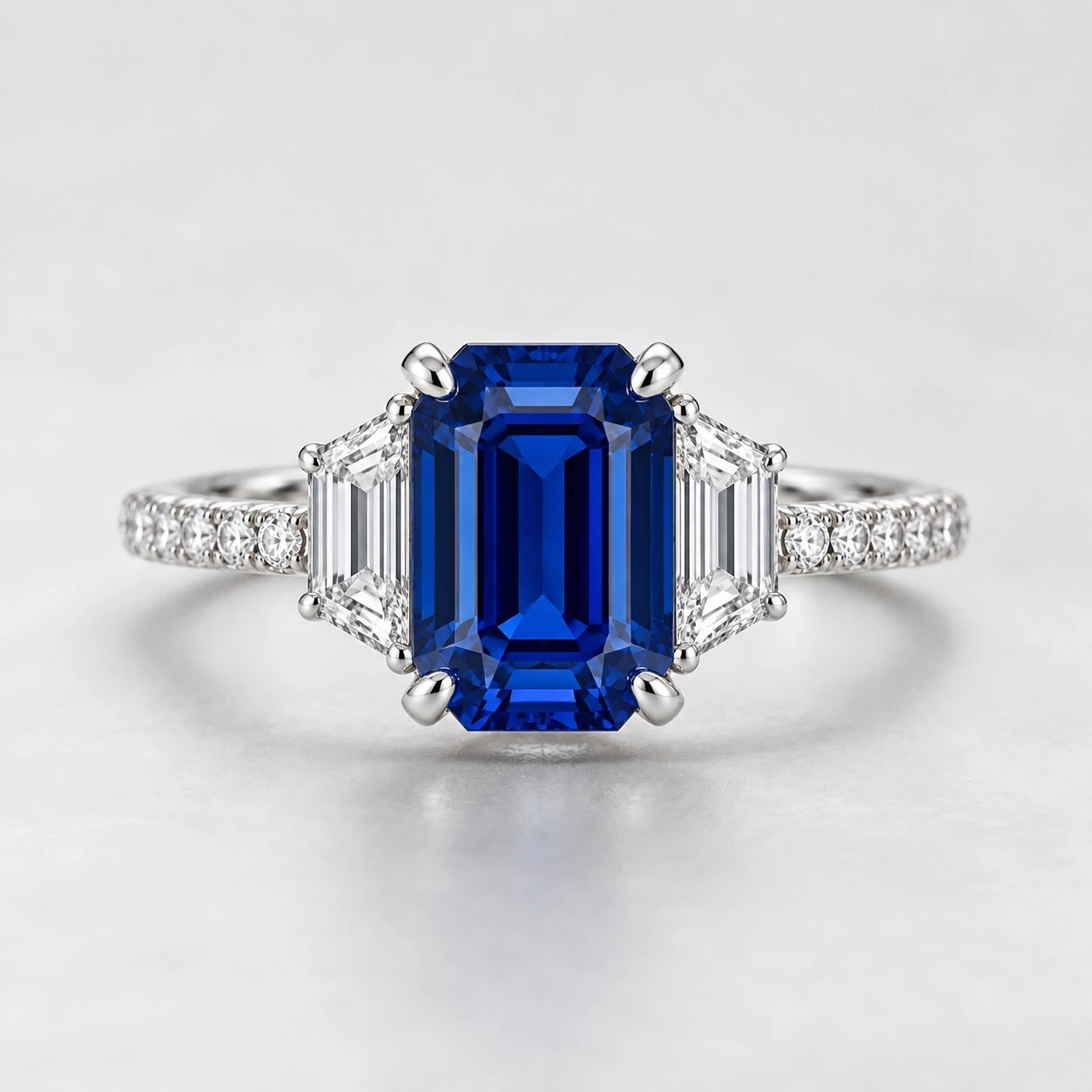
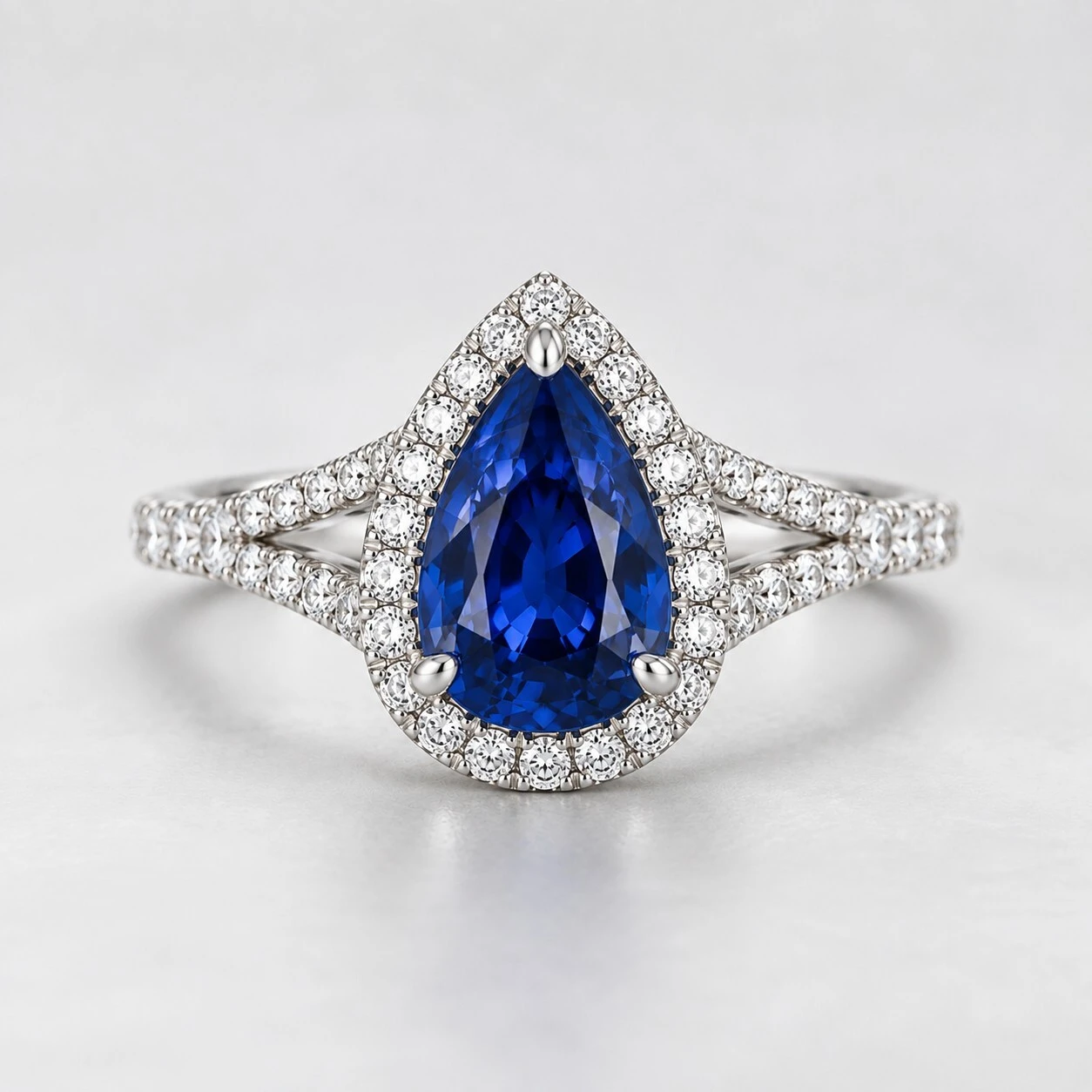
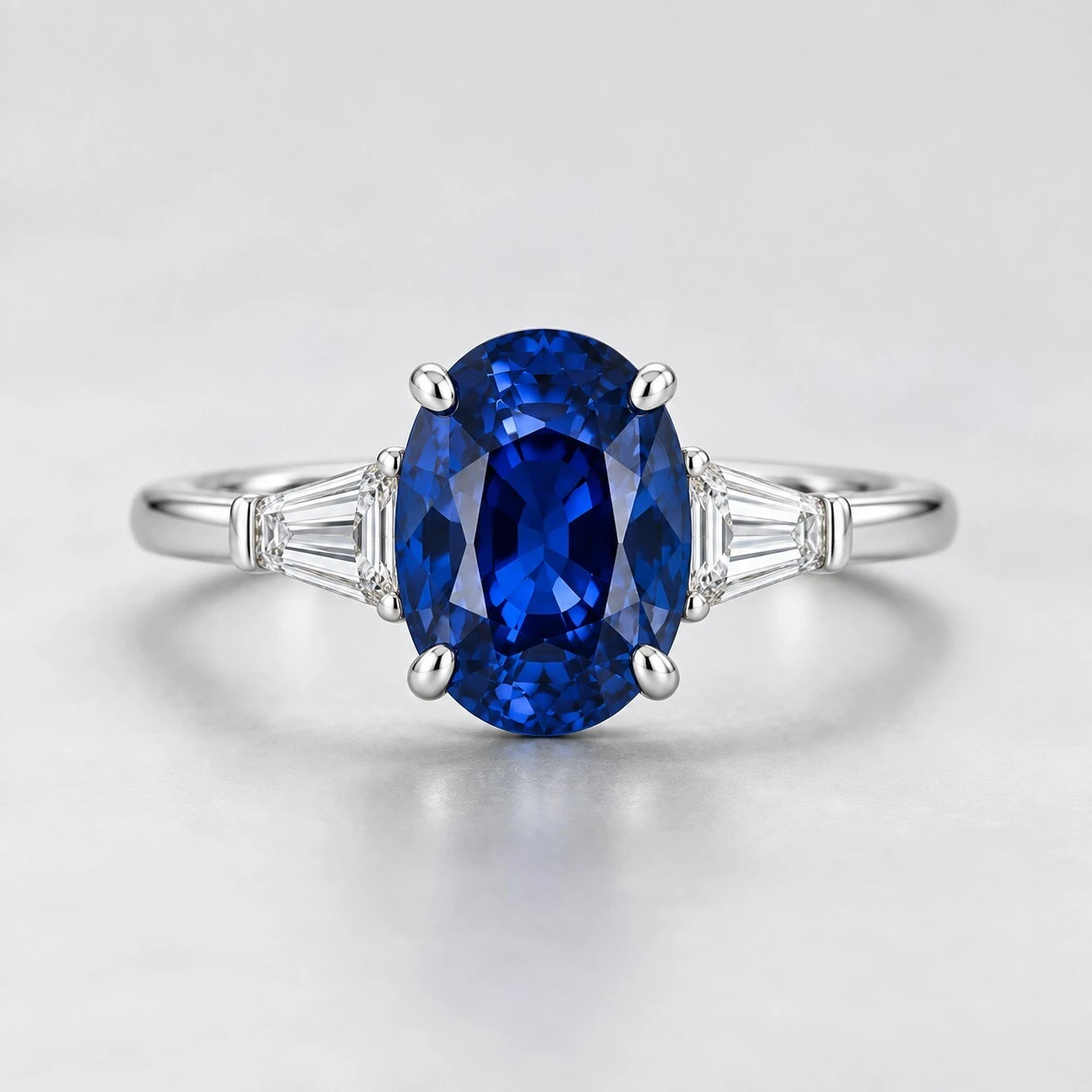
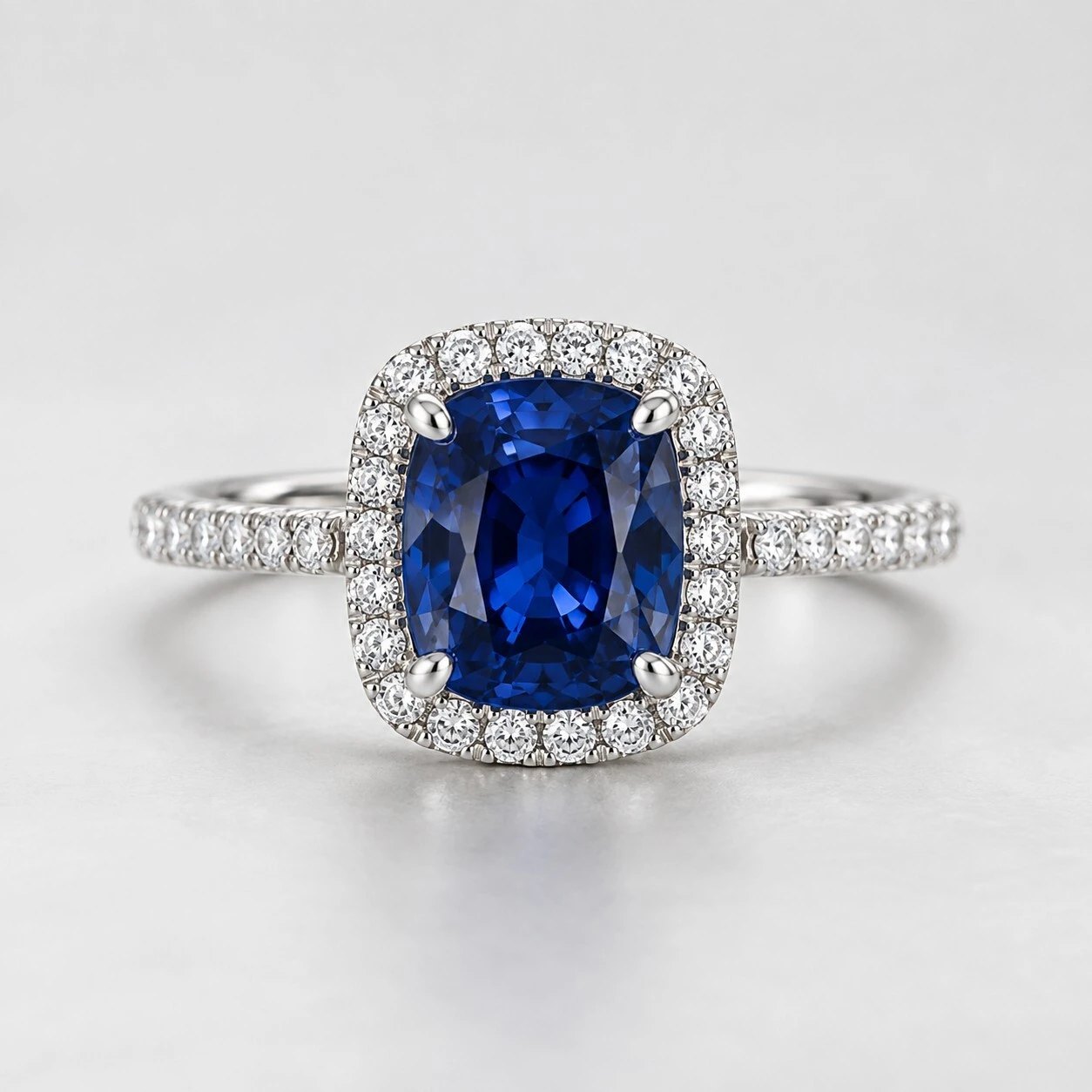
Four shapes, four different rings
Emerald cut. Step facets rather than brilliant ones, so the stone reads as sheets of colour instead of sparkle. It shows a sapphire’s body colour more honestly than any other shape — which is why it rewards a very good stone and is unforgiving of a mediocre one.
Pear. The most elongating shape on the hand, and the most distinctive. Set within a halo on a split shank, the halo does double duty: it protects the point, which is the vulnerable part of any pear.
Oval. The quiet classic, and the shape Diana’s ring made famous. Tapered baguettes at the shoulders lead the eye inward without competing. On a polished shank rather than a pavé one, the sapphire carries the whole ring.
Cushion. Softened corners and a slightly antique feel. The halo makes a modest stone read considerably larger, which is the single most efficient way to buy presence.
Built for you, not bought off a tray
We make these to order. That means the centre stone is chosen for you — its size, its exact blue, its cut — and the setting is built around it, in 14K or 18K, white, yellow or rose.
It is a better way to buy a sapphire than choosing between whatever three rings happen to be in a case, and it is the part of this business we most enjoy. Bring a budget and an idea, and we will show you stones.
Caring for sapphire
Sapphire is one of the few coloured stones that asks almost nothing of you. Hardness of 9, excellent toughness, no cleavage.
Do
- Clean with warm water, mild dish soap, and a soft brush — always safe, for any sapphire
- Have prongs checked once a year, particularly on a ring worn daily
- Store apart from diamonds, which are the one thing that will scratch it
Ask first
- Ultrasonic and steam are fine for untreated and heat-treated sapphire — but not for fracture-filled or dyed stones, which need a damp cloth only
- Never re-polish a diffusion-treated stone; the colour can sit in a shallow layer and come off
- Never use boric acid powder on sapphire — it etches the surface
The short version: know what treatment your stone has had, and the cleaning method follows from it. For everything we sell, warm soapy water is the answer.
Choosing sapphire as a gift
September is a better gifting month than August — people are back from travelling, the year has structure again, and a birthday actually gets marked.
Sapphire carries the additional advantage of meaning more than one thing. It is the September birthstone, the traditional gem of the fifth and forty-fifth anniversaries, and a long-standing symbol of sincerity, constancy and faithfulness. Very few gifts can be the right one for three different occasions.
Common questions about sapphire
What is the September birthstone?
Sapphire is the birthstone for September, and the only one. Unlike some months, September has no alternate or secondary stone on the modern list.
Are all sapphires blue?
No. Sapphire is the gem variety of corundum and occurs in every colour except red — pink, yellow, green, purple, orange, colourless, and the rare pinkish-orange padparadscha. Red corundum is classified as ruby instead. All colours of sapphire are legitimate September birthstones.
Is sapphire durable enough for an engagement ring?
Yes, and it is the best coloured stone for the purpose. Sapphire rates 9 on the Mohs scale, has excellent toughness, and has no cleavage — no internal plane along which it can split from a knock. Diamond is harder but does have cleavage. For a ring worn every day, sapphire is genuinely practical.
Are sapphires heat-treated, and does it matter?
Most sapphire on the market has been heated to improve colour and clarity. The treatment is permanent, stable, accepted throughout the industry, and required to be disclosed. It does not affect how you care for the stone. Untreated sapphires of fine quality command a premium because they are far scarcer; if a stone is sold as unheated, ask for a report from GIA, AGL, SSEF or Gübelin.
How much does sapphire jewelry cost?
At Karat 22 Jewelers in Houston, the ready-to-ship September sapphire collection runs from $2,250 for the 14K yellow gold station chain bracelet to $12,500 for the 18K yellow gold alternating sapphire and floral cluster bangle. Most pieces fall between $3,700 and $7,200. Sapphire engagement rings are made to order, and the price depends on the centre stone you choose.
How do you clean sapphire jewelry?
Warm water, mild dish soap and a soft brush are always safe. Ultrasonic and steam cleaners are fine for untreated and heat-treated sapphire, but not for fracture-filled or dyed stones, which should be wiped with a damp cloth only. Never use boric acid powder, which etches the surface.
What does sapphire symbolize?
Sapphire is traditionally associated with sincerity, truth, faithfulness and nobility. Medieval clergy wore it as a symbol of Heaven, and the cardinal’s ring is still traditionally set with a sapphire. It is also the gem of the 5th and 45th wedding anniversaries.
Which anniversary is sapphire for?
Sapphire is the traditional gem for the 5th and 45th wedding anniversaries. Worth noting that there is no official anniversary gemstone list — the widely used chart is an accepted guide developed by industry bodies rather than a standard.
Where can I buy sapphire jewelry in Houston?
Karat 22 Jewelers carries sapphire rings, bracelets, earrings and necklaces at 5623 Hillcroft Avenue in Houston, and has served the city since 1983. Sapphire engagement rings are made to order, with the centre stone selected to your preference for size, colour and cut.
Serving Houston since 1983
See them in daylight
Blue is the hardest colour to photograph honestly. Screens push sapphire toward either navy or electric, and neither is what the stone looks like in the hand.
Our September sapphire collection is in the case now at Karat 22 Jewelers, 5623 Hillcroft Avenue, Houston. If you are considering an engagement ring, come in and we will show you loose stones first — the setting is the easy part.